
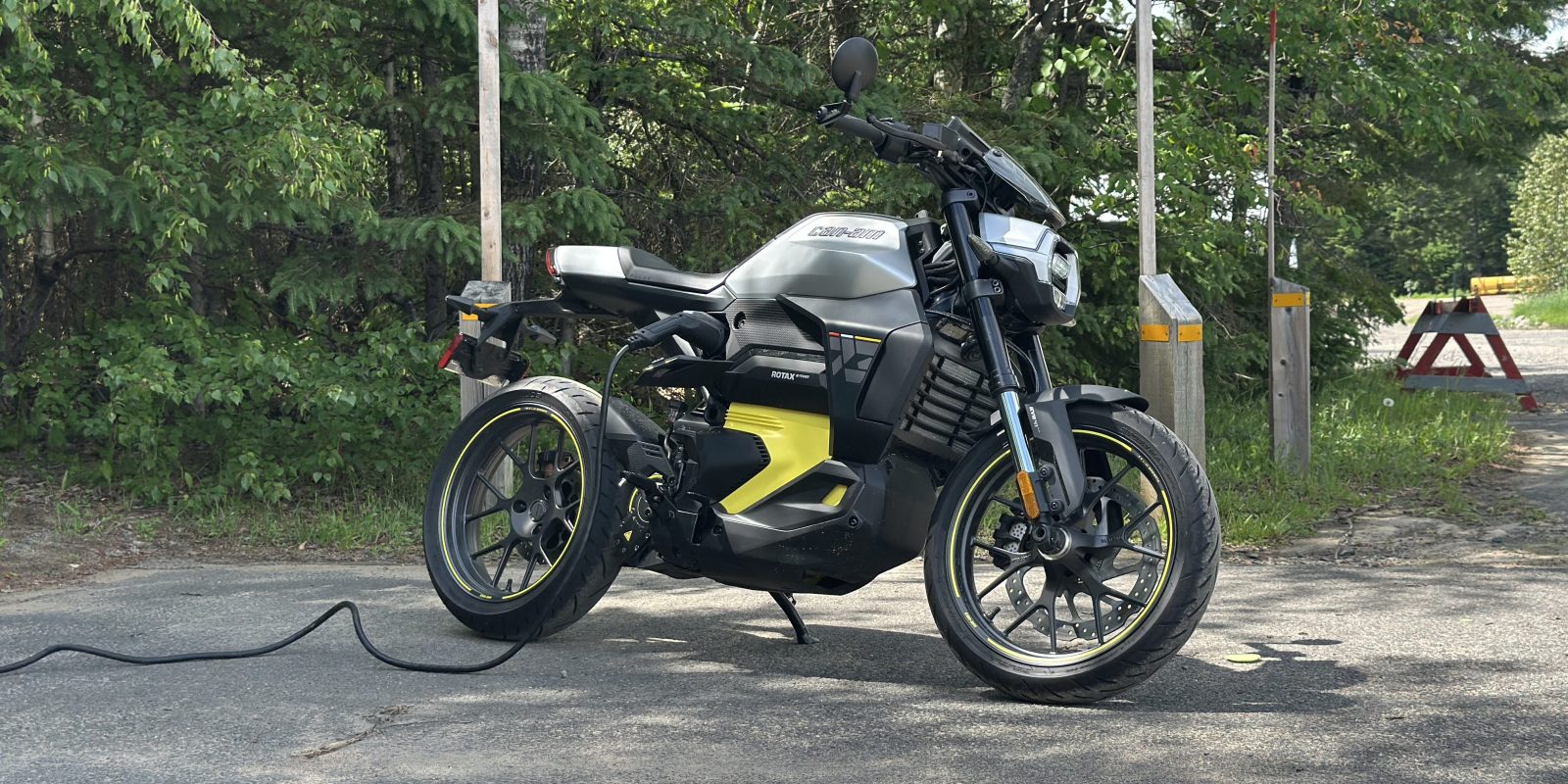
I drove the Can-Am Pulse over several rides, including a 4-hour stretch mixing city streets and higher-speed roads, for a total 570 km. I had the opportunity to try it in the rain as well as on a very hot sunny day, day and night. Here is my review:
Abstract
The Can-Am Pulse is a compact, city-focused electric motorcycle that delivers on its promise: an agile, comfortable commuter that’s genuinely fun to ride, even for a taller rider like me. Over 570 km of mixed city and highway riding, in sun, rain, and after dark, the Pulse impressed with confident brakes, a well-tuned traction control system, and a throttle that lets you dial in acceleration and regen with a simple twist in either direction. Its 6.6kW onboard charger and 50-minute Level 2 top-up time are competitive.
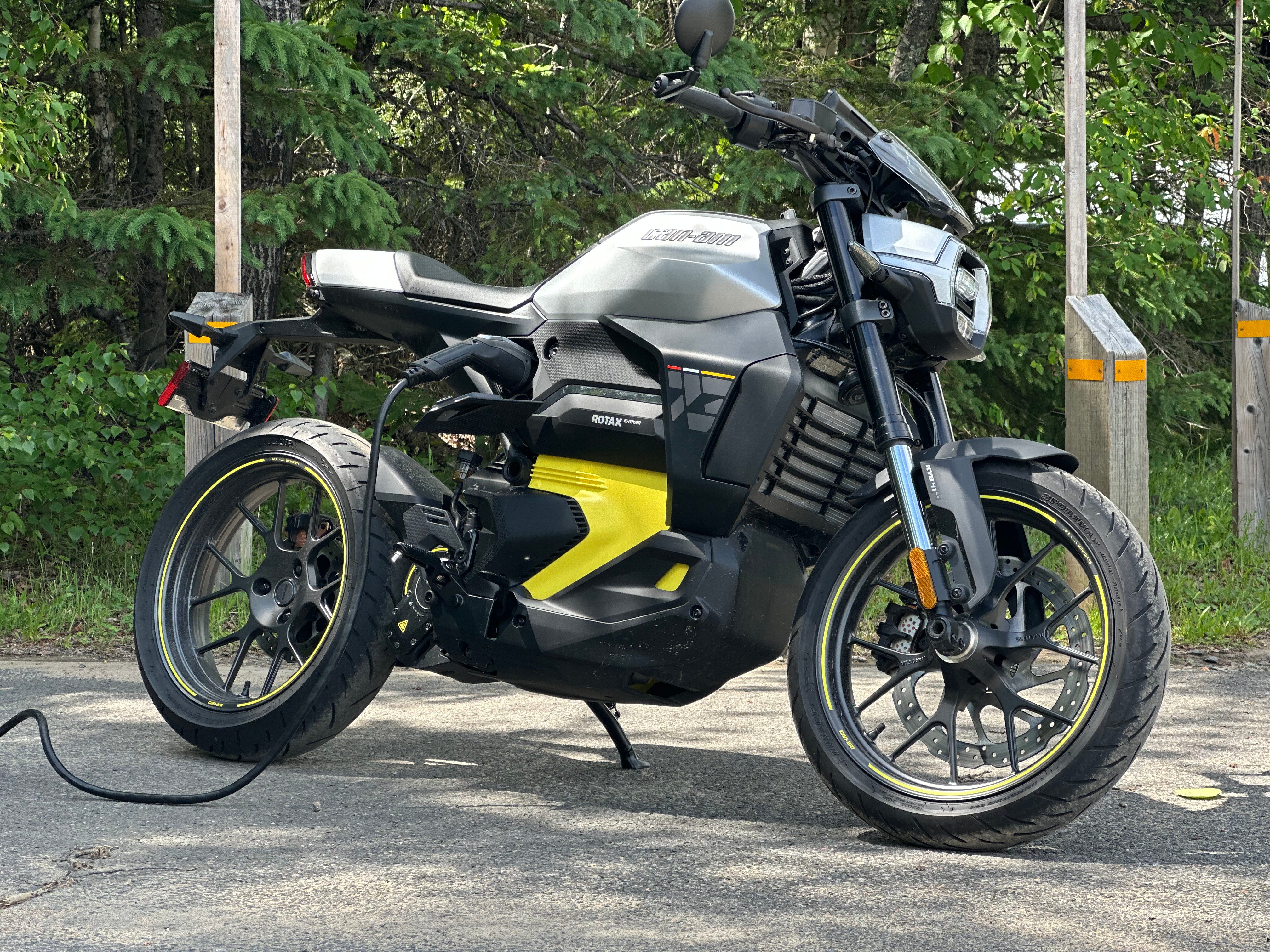
It’s not without rough edges. The cooling fan running constantly in hot weather (30C) is an unnecessary annoyance, Apple CarPlay comes with frustrating restrictions, and the lack of a DC fast-charging option limits how far the Pulse’s usefulness can stretch beyond the daily commute. But for what it’s built to do, get you through city traffic quickly, cheaply, and with a grin on your face, the Can-Am Pulse mostly delivers.
Here are some of the specs
- Rotax E-Power motor, liquid-cooled, single-speed clutchless direct drive
- 47HP (35kW) peak / 27HP (20kW) continuous
- 53 lb-ft (72Nm) of torque, flat from 0-4,600rpm
- 8.9kWh liquid-cooled battery (shared with the Outlander Electric and Origin)
- 160km (100mi) of city range / ~130km (80mi) combined (WMTC)
- 80mph (129kph) top speed
- 0-100kph (0-62mph) in 3.8s
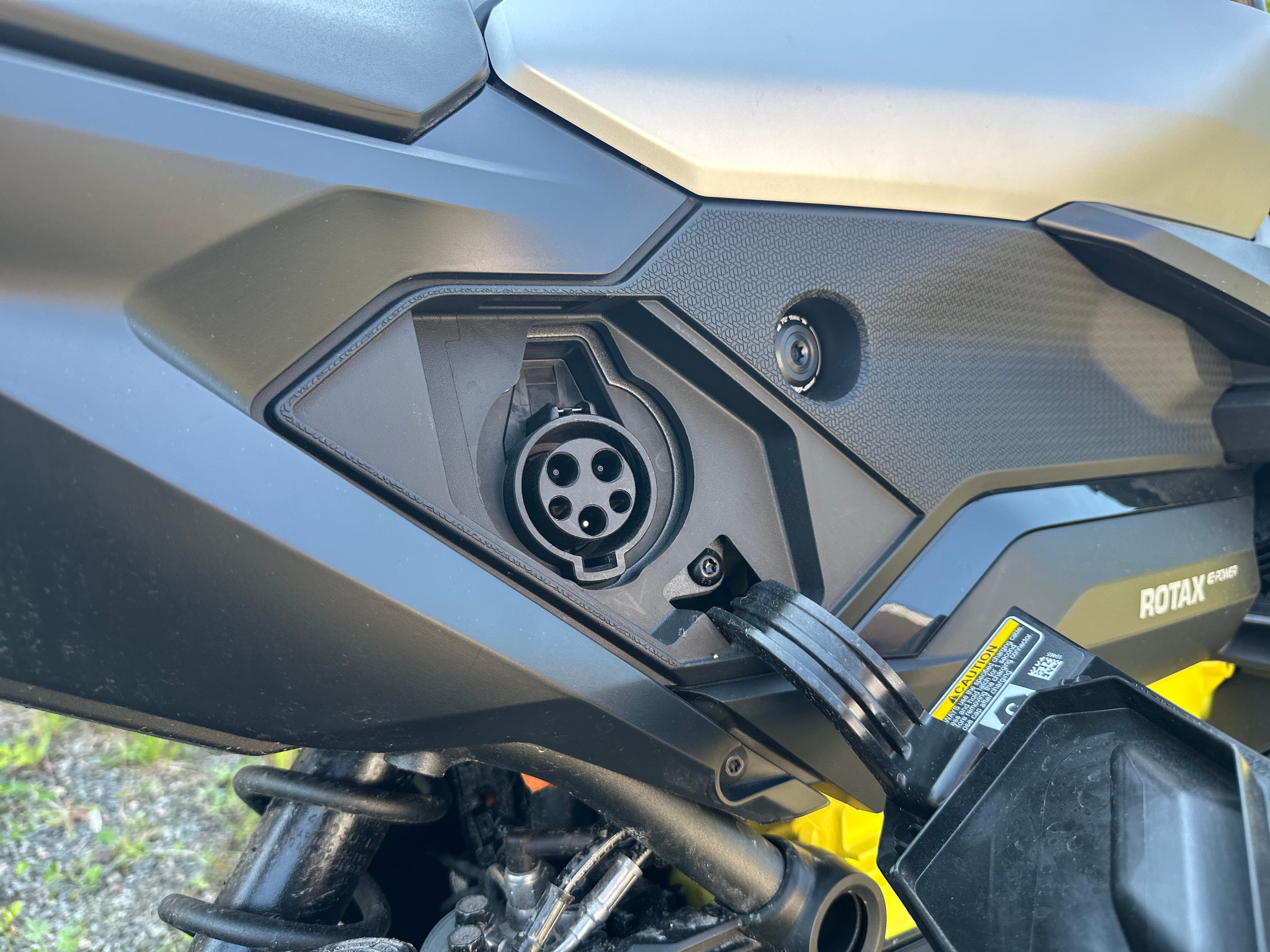
- J1772 connector, 6.6kW onboard charger
- 20-80% in 50min / 0-100% in ~90min on Level 2; up to 5h on Level 1
- 5-year / 50,000km (31,068mi) battery warranty, 2-year vehicle warranty
- Dry/curb weight 390lbs (177kg)
- 17in wheels, Dunlop Sportmax GPR-300 tires (110/70R17 front, 150/60R17 rear)
Score by Category
- Engineering: 7 / 10
- Electric Performance & Charging: 10 / 20
- Ergonomics, Cabin & Storage: 11 / 17
- Driving Experience: 8 / 13
- Extra: 2.5 / 5
- Value: 6 / 10
- Fitness for Purpose: 3.5 / 5
- Safety: 3.5 / 5
Total: 51.5 / 85 — 60.5 / 100
The Can-Am Pulse shares its 8.9 kWh liquid-cooled battery pack with the Outlander Electric ATV and the Origin, the same pack I found packaged on its ATV sibling. In that instance, though, it is used as a structural member of the vehicle, effectively acting as a part of the motorcycle frame.
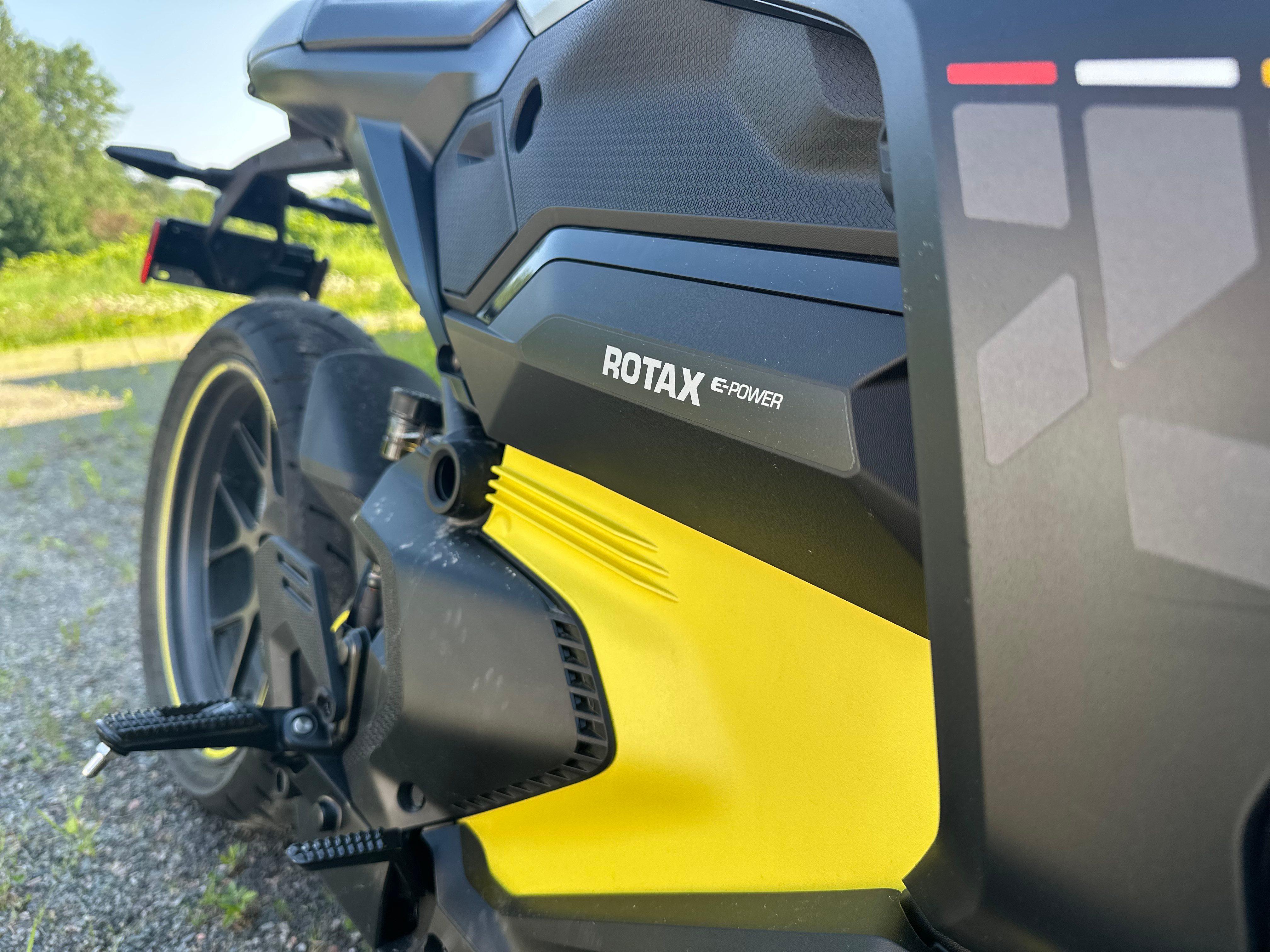
The battery is made of NMC cells, which I’m fairly confident are of cylindrical shape and use the 2170 format. That lines up with BRP’s own patent filing, WO2023073665A1 — “Electric vehicle with an electric powerpack arrangement”, which describes the battery pack as 7 modules of 70 cylindrical cells each (490 total) and specifically calls out “3.5V cylindrical cells, such as LG™ M50L cells” — a 2170-format cell rated around 18.2 Wh; 490 of them works out to roughly 8.9kWh, matching the pack’s official rating almost exactly. I want to stress that a patent filing describes engineering intent at the time it was drafted, not necessarily what shipped in the final production bike, so treat this as a strong lead rather than a confirmed spec, and I still haven’t found a teardown to verify it firsthand.
The battery onboard charger is fixed on the battery pack, as well as the inverter, as shown in the patent. This results in an effectively compact battery assembly integrating all the necessary components, perfect for a small motorcycle. However, this means the battery pack assembly isn’t as energy dense as it could be by spreading the other parts elsewhere on the vehicle. Everything is a compromise.
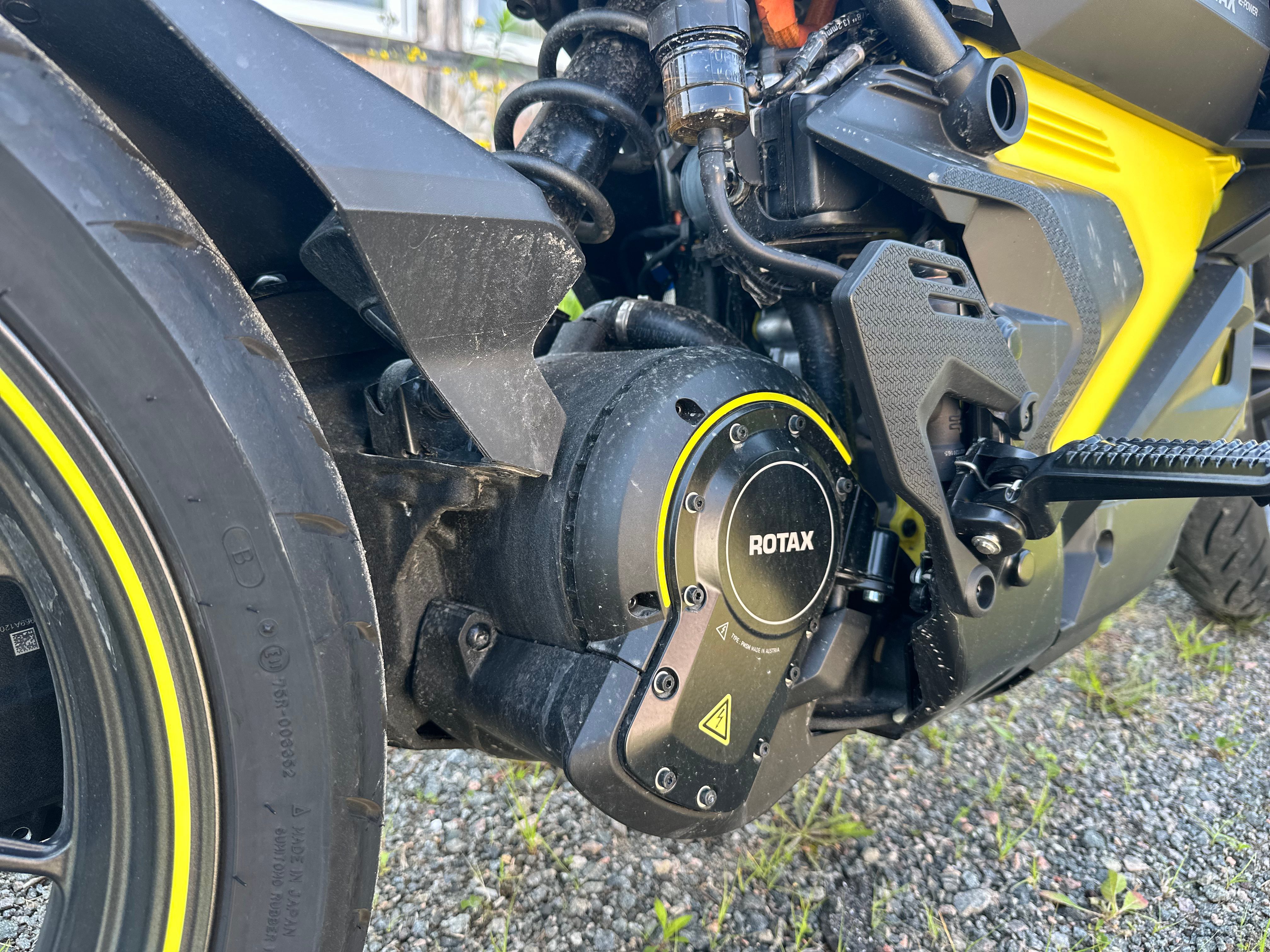
As for the powertrain, the Can-Am Pulse is equipped with the same very quiet brushless permanent magnet motor and proprietary drive as the Outlander I tested earlier in the year. Actually, it’s the other way around, since the Pulse came out first. It is a proprietary motor and drive assembly coming from Can-Am’s own Rotax factory. Unlike the Outlander, which routes power through a two-speed gearbox and a front-differential output shaft for 4WD, the Pulse keeps things simple with a single-speed, clutchless direct drive off its Rotax E-Power motor, rated at 47HP (35kW) peak, 27HP (20kW) continuous, and 53 lb-ft (72Nm) of torque held flat from 0 to 4,600rpm.
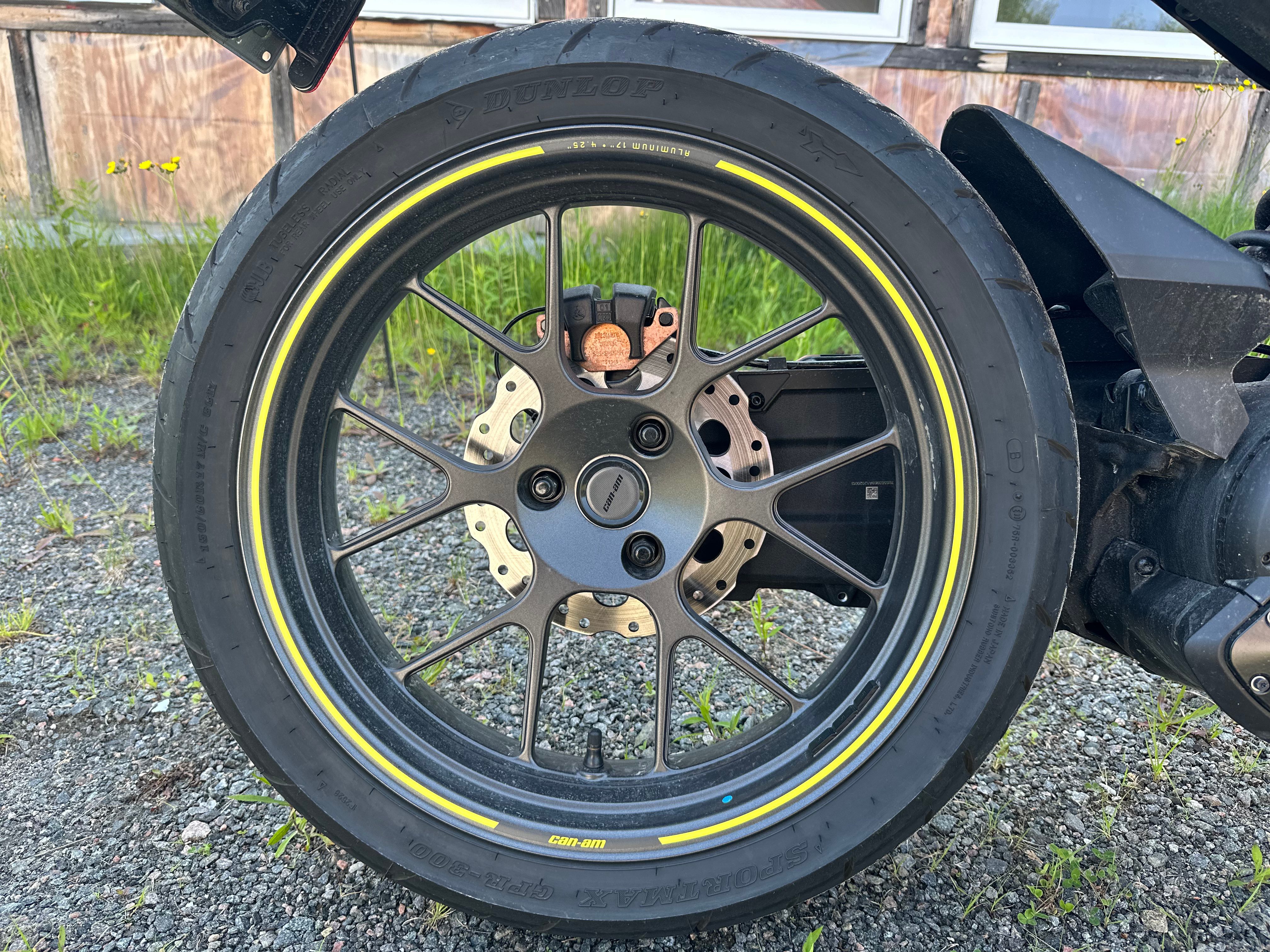
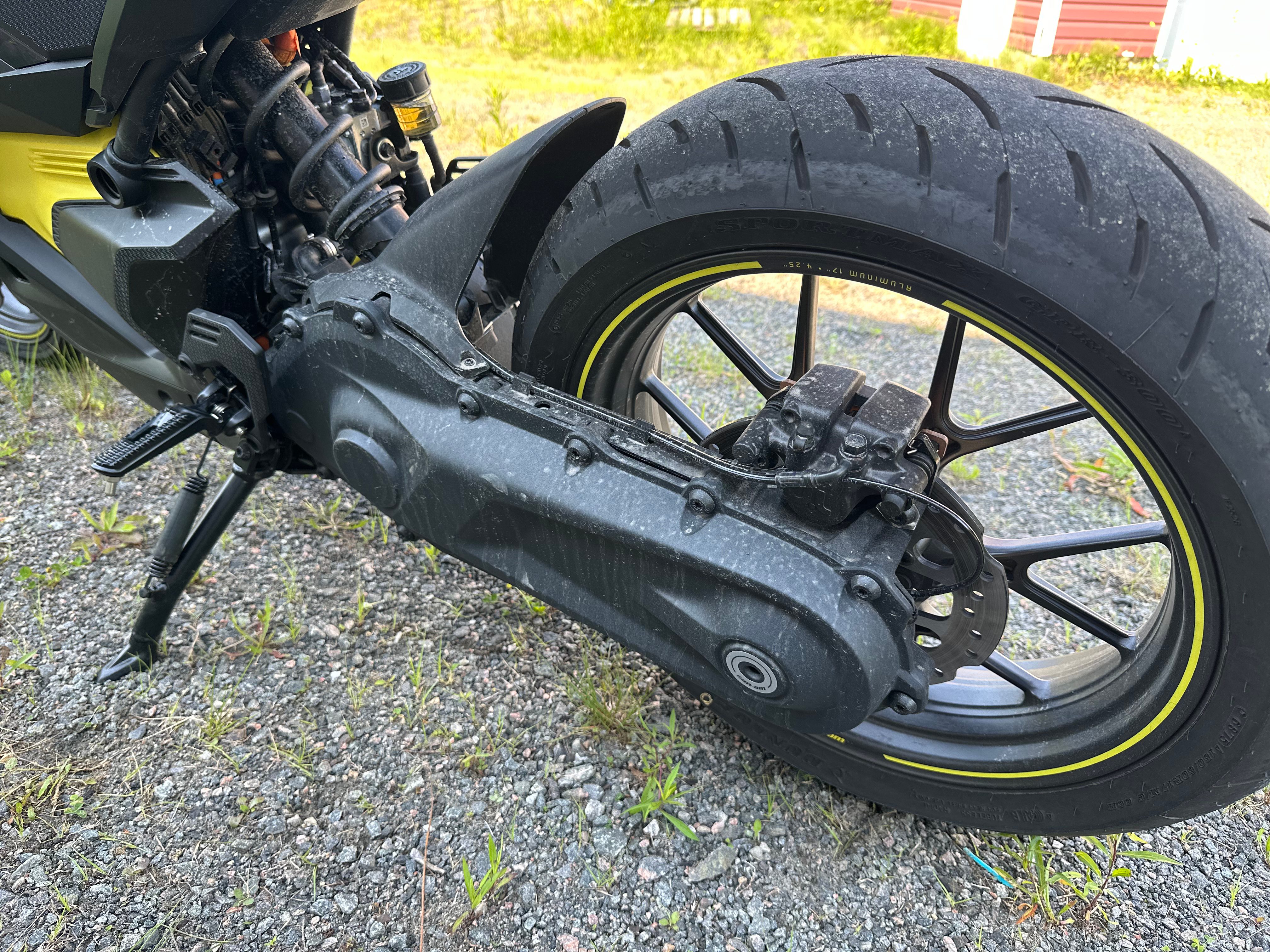
For the Pulse, the motor is bolted directly on the swingarm, allowing no relative movement between the rear wheel and the motor, which means the chain is always in tension, removing the delay when going from acceleration to deceleration you normally feel when chain slack needs to be pick up. The chain is enclosed in an oil-containing chaincase with an automatic tensioner, protecting the chain, virtually removing chain maintenance and being totally silent. The motor is now part of the unsprung assembly, but since it’s small and light, I couldn’t tell from driving it.
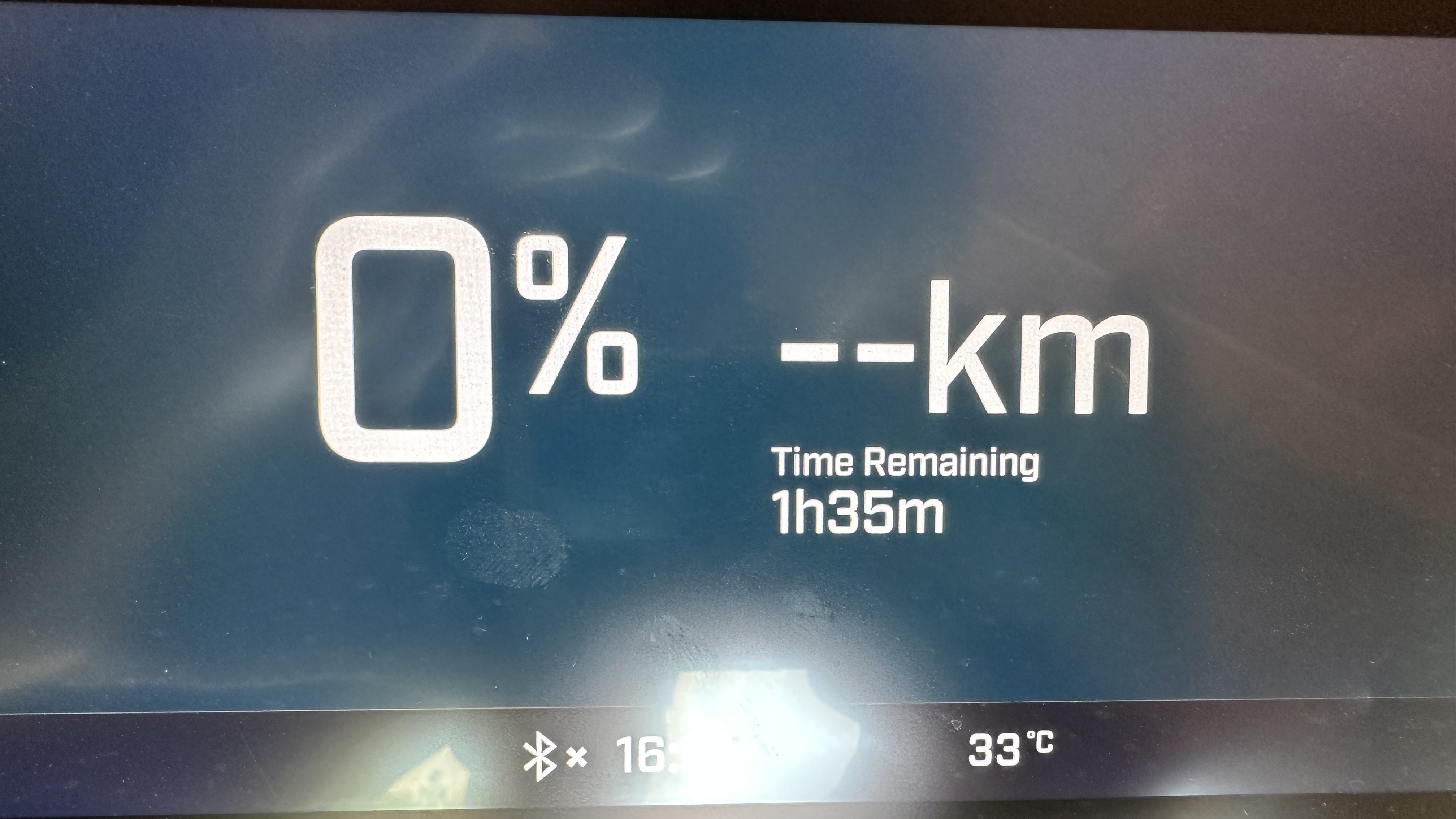
Charging happens through the same J1772 inlet and 6.6kW onboard charger as the Outlander, good for a 20-80% top-up in 50 minutes or a full charge in about 90 minutes on Level 2; Level 1 charging can be completed in up to 5 hours for a full charge.
Can-Am rates the Pulse for up to 160km (100mi) of city range and about 130km (80mi) on the combined WMTC cycle. In reality, I managed to get up to 140km (87mi) of range when city driving, which in my case consists of not going on roads faster than 70 kph (43mph).
On the highway, even at 100 kph (62 mph), the range drops fast, and you can expect it to be closer to 80 km (50 mi). Nothing new for an electric motorcycle. It’s worth noting that range is affected by the rider’s size and shape, since you’re part of the vehicle’s aerodynamics — I’m 6’2’’ (188cm) and 185lbs (84kg) — especially on a naked bike that doesn’t have any fairing to smooth the airflow.
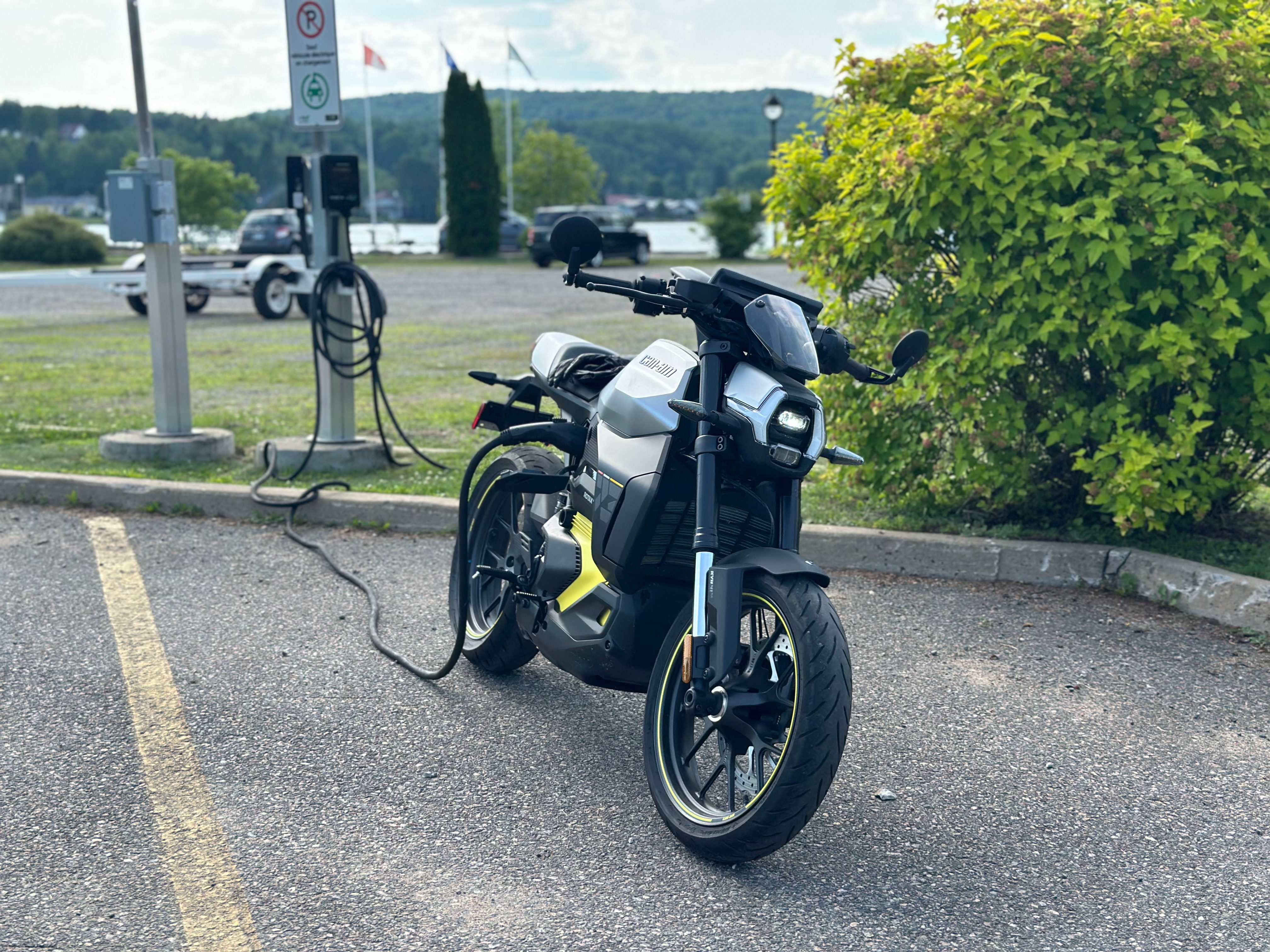
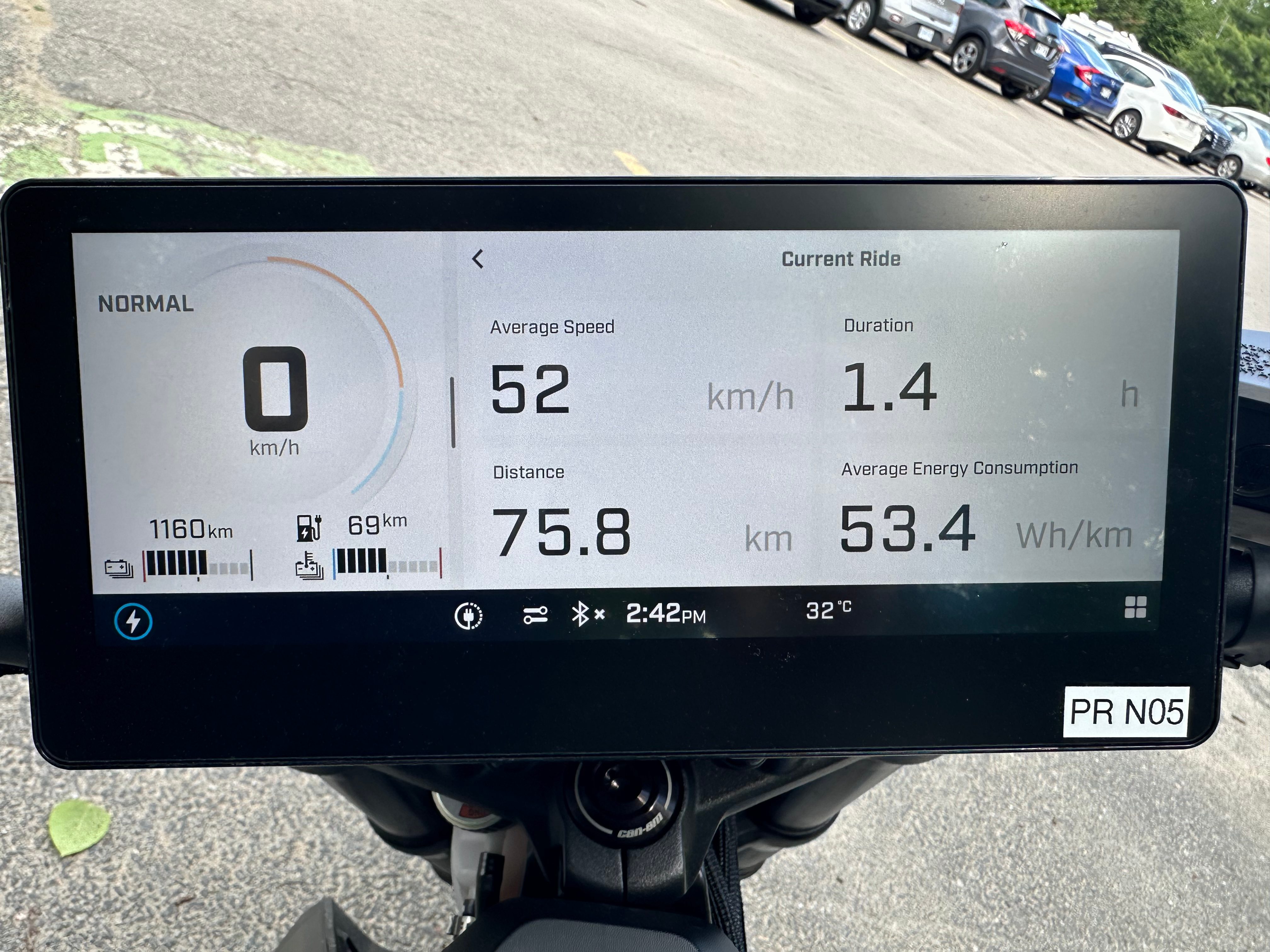
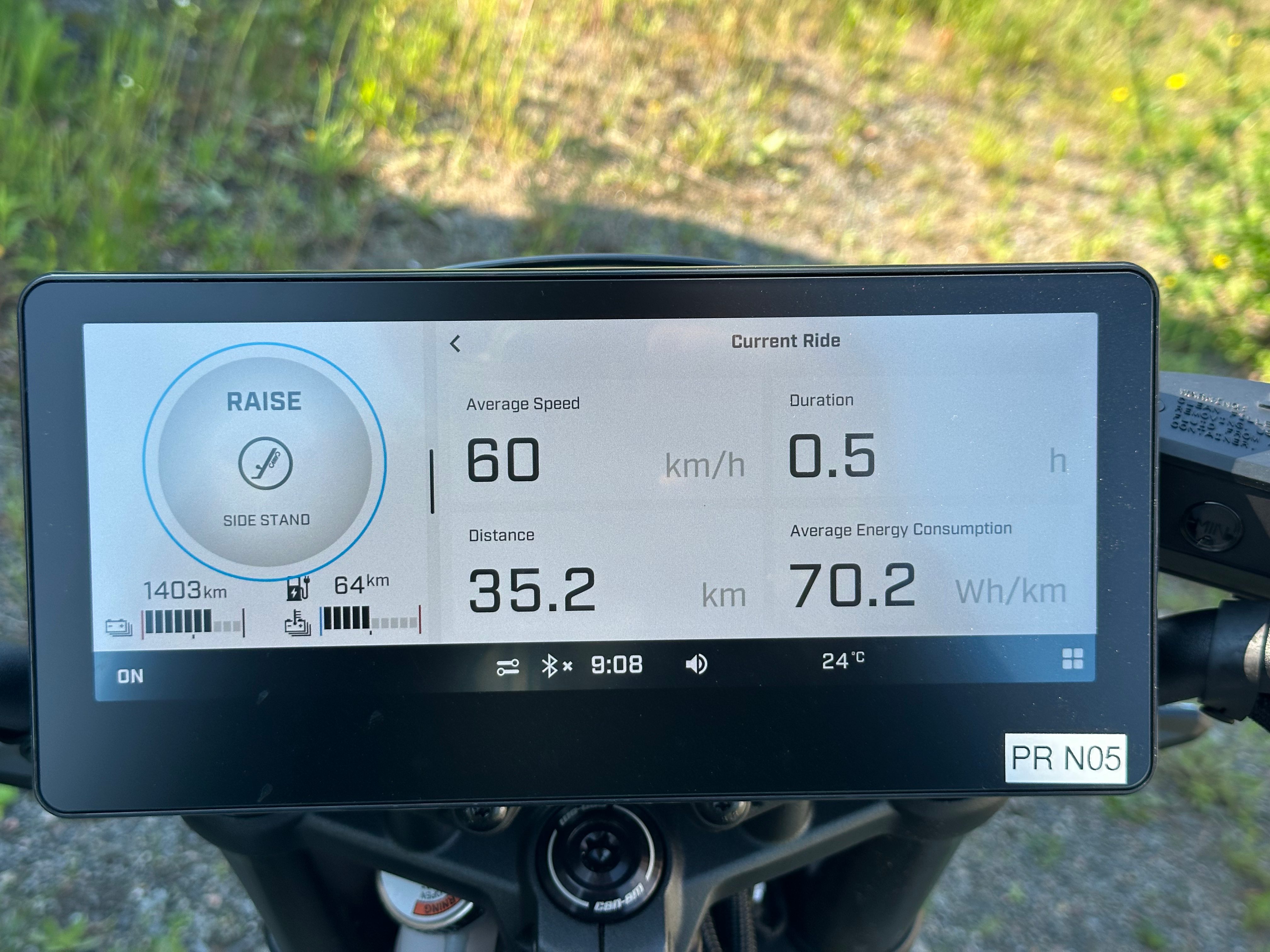
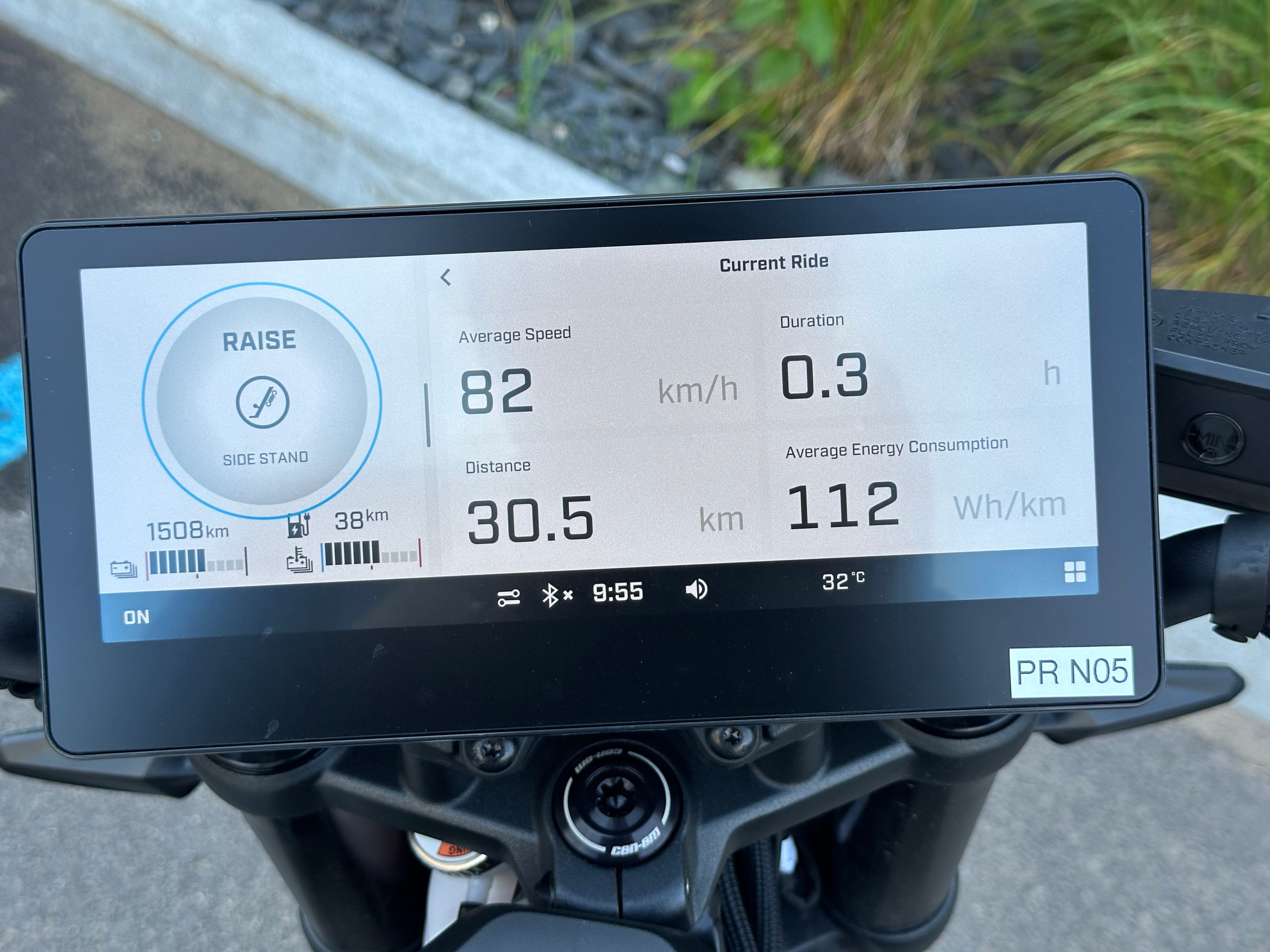
Efficiency varied a lot depending on the road type. I saw 53.4 Wh/km (85.9 Wh/mi) on city streets, 112 Wh/km (180.2 Wh/mi) on the highway, and 70.2 Wh/km (113 Wh/mi) on back roads.
For a city bike, the range and charging speed are adequate. For those who don’t know, some of the competition does not even offer a Level 2 charging solution, only Level 1 capped at 1300W or as low as 700W depending on the model. I’m glad Can-Am chose to go with at least 6.6 kW of charging power.
That said, even if I applaud them for not going the cheapest route, they should have included a DC fast charging option. A charging controller for that isn’t that expensive (trust me, I designed one) and with a NACS inlet, it doesn’t take much more volume on the vehicle, though you have to account for the added contactor to route the AC or DC power coming from the inlet appropriately.
Adding this option, with a 20-25min 0-80% charging session, would greatly increase the utility of this motorcycle, letting it serve its original purpose as a city bike while also handling the occasional weekend road trip. You’d still have to charge often, but it will be at least possible, much like it was with the original EVs, such as the Chevy Spark EV or the BMW i3 (first of its name), etc.
I don’t actually understand why electric motorcycles are treated differently than early EVs on that front, as I think they meet much the same needs.
Since the Pulse’s battery pack is liquid-cooled, it’s already set up for sustained DC fast charging, though the cells would need to be swapped for something like the EVE 50PL or Molicel 60P to achieve real fast-charging rates (3C sustained).
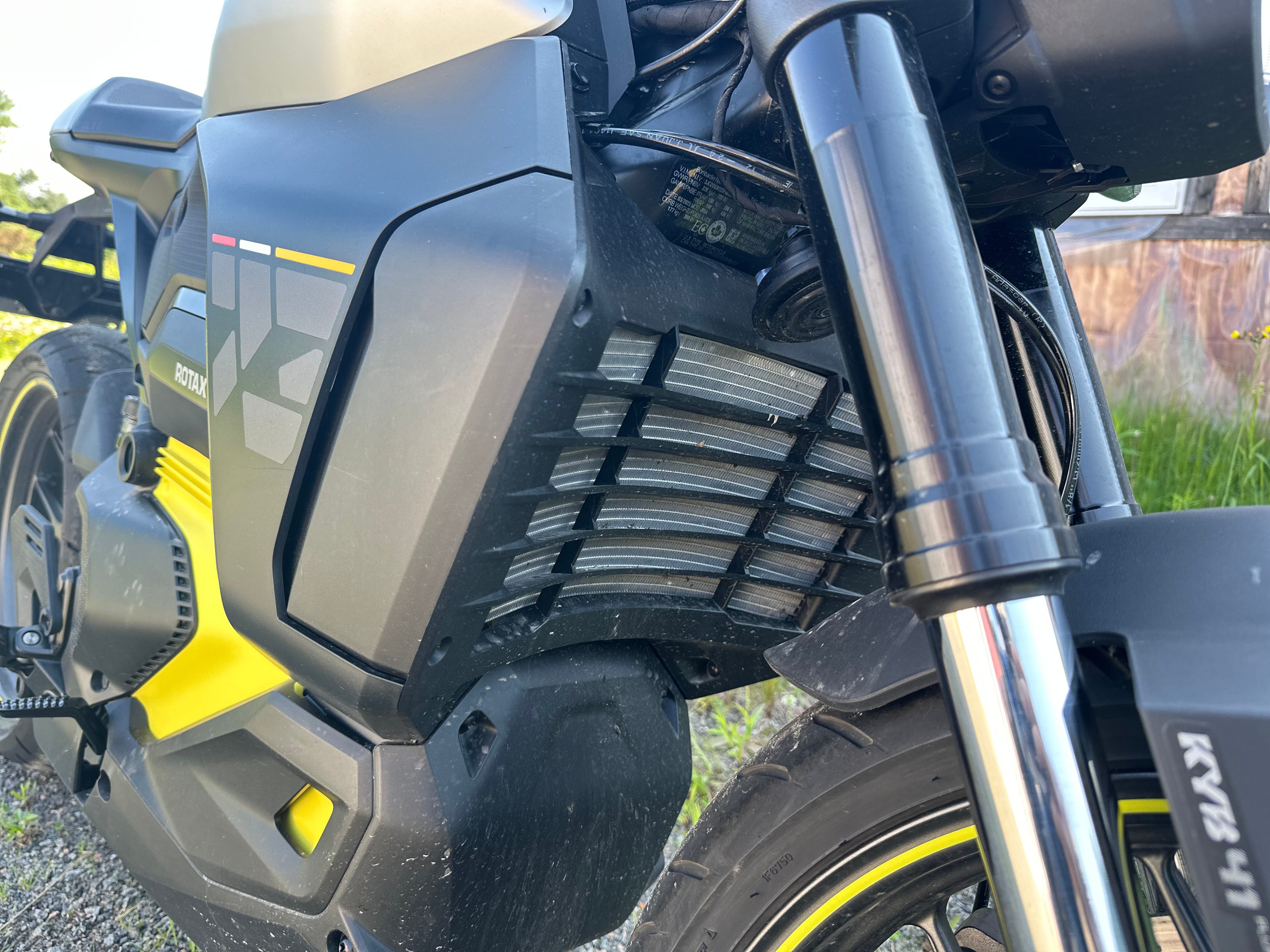
At the moment, cooling of the battery pack isn’t really necessary, and the competition already proved that for standard driving at city speed, the battery won’t heat up much. In this case, the cooling system is working more for the powertrain and onboard charger than for the battery.
This system was also one of the weak points of the experience, as it would never turn off the fan when starting the bike in 30°C weather. The fan would run constantly, I believe, to cool the cells to their ideal 25°C, but without any sort of refrigerant on board, the cells can’t be cooler than ambient temperature. It’s annoying, too — you’ll feel the fan’s vibrations and hear its noise, the only source of either on the vehicle.
The seat is a step up from my own 2018 Zero FX, but it’s still not built for long days in the saddle; after a 4-hour ride, I was ready to get off.
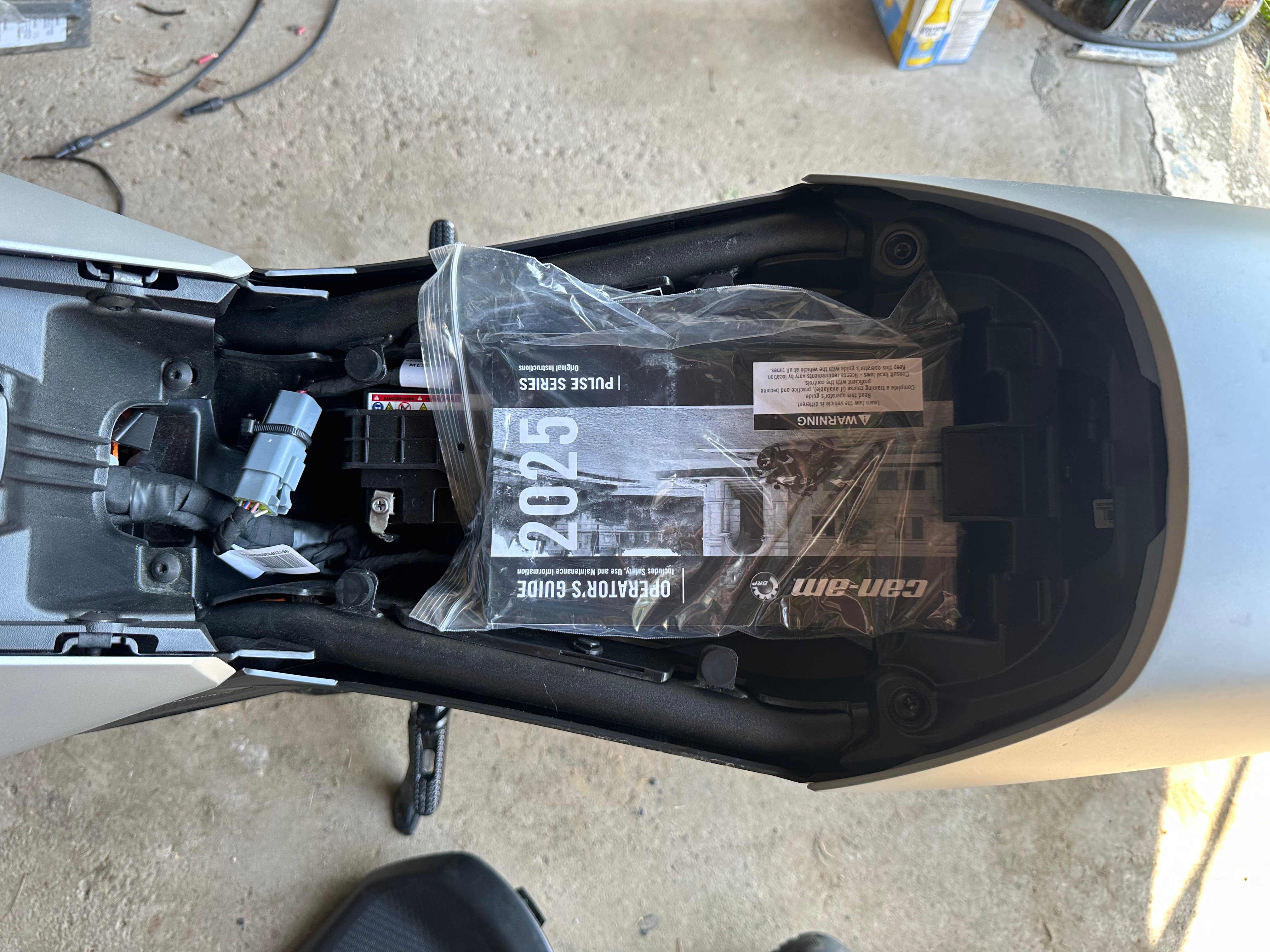
As a small naked bike built for city commuting, the Pulse doesn’t offer much in the way of storage, unless you opt to add some accessories. There is a small glove compartment, though, complete with a USB-A outlet — handy for topping up your phone or running Apple CarPlay.
The mirrors are a pleasant surprise: they’re a good size and give a clear view of what’s behind you. The brake lever felt right at home in my hand too, thanks to an integrated reach adjuster that lets you dial in the lever’s distance to match your hand size.
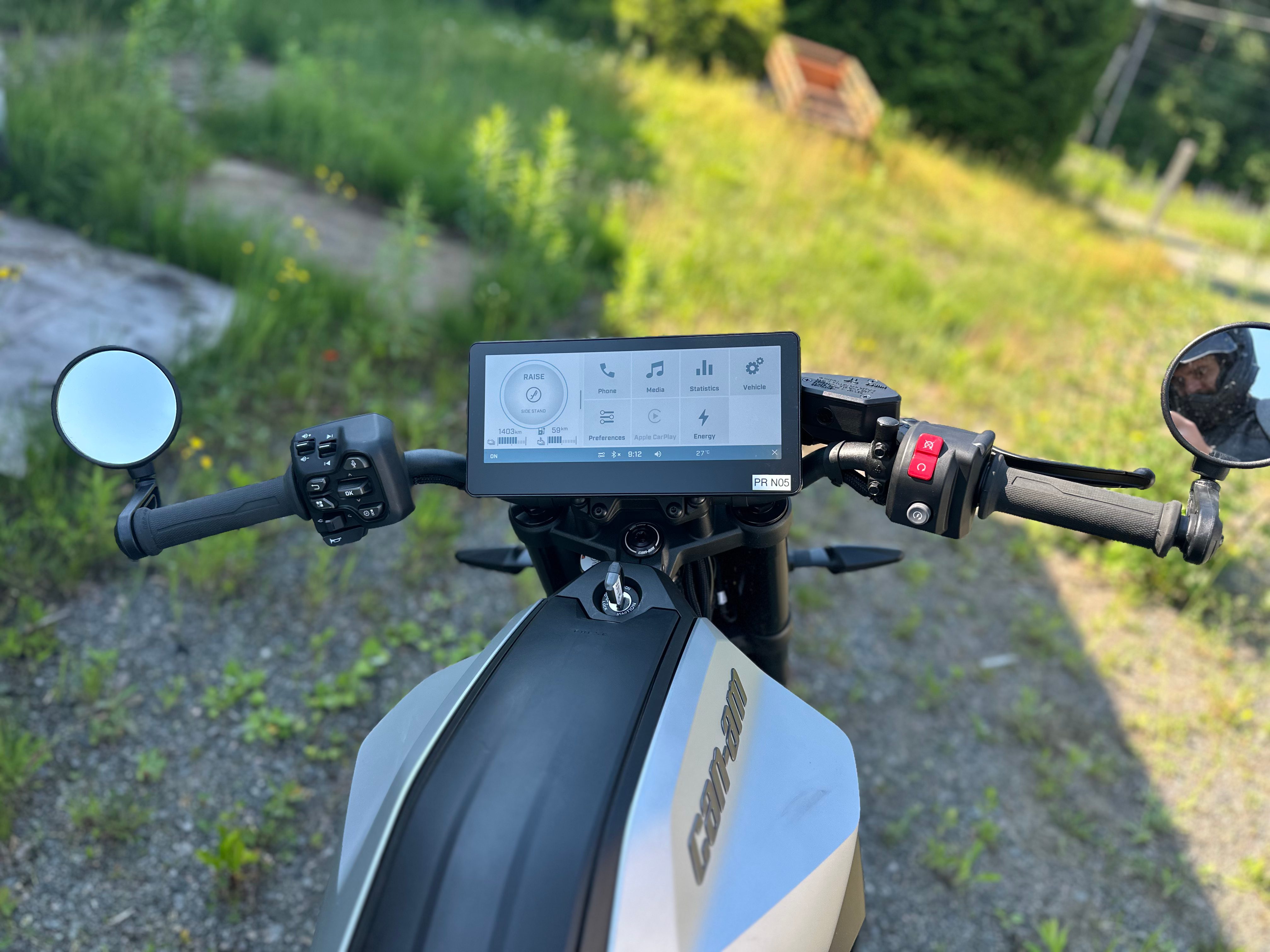
One of my favorite details is the throttle: twist it down for acceleration, and twist it back up for stronger regen braking. I really enjoyed having that much control on the powertrain.
Despite being a smaller city bike, I never felt cramped on the Pulse. Even at my height, I fit on it nicely.
Software & User Interface:
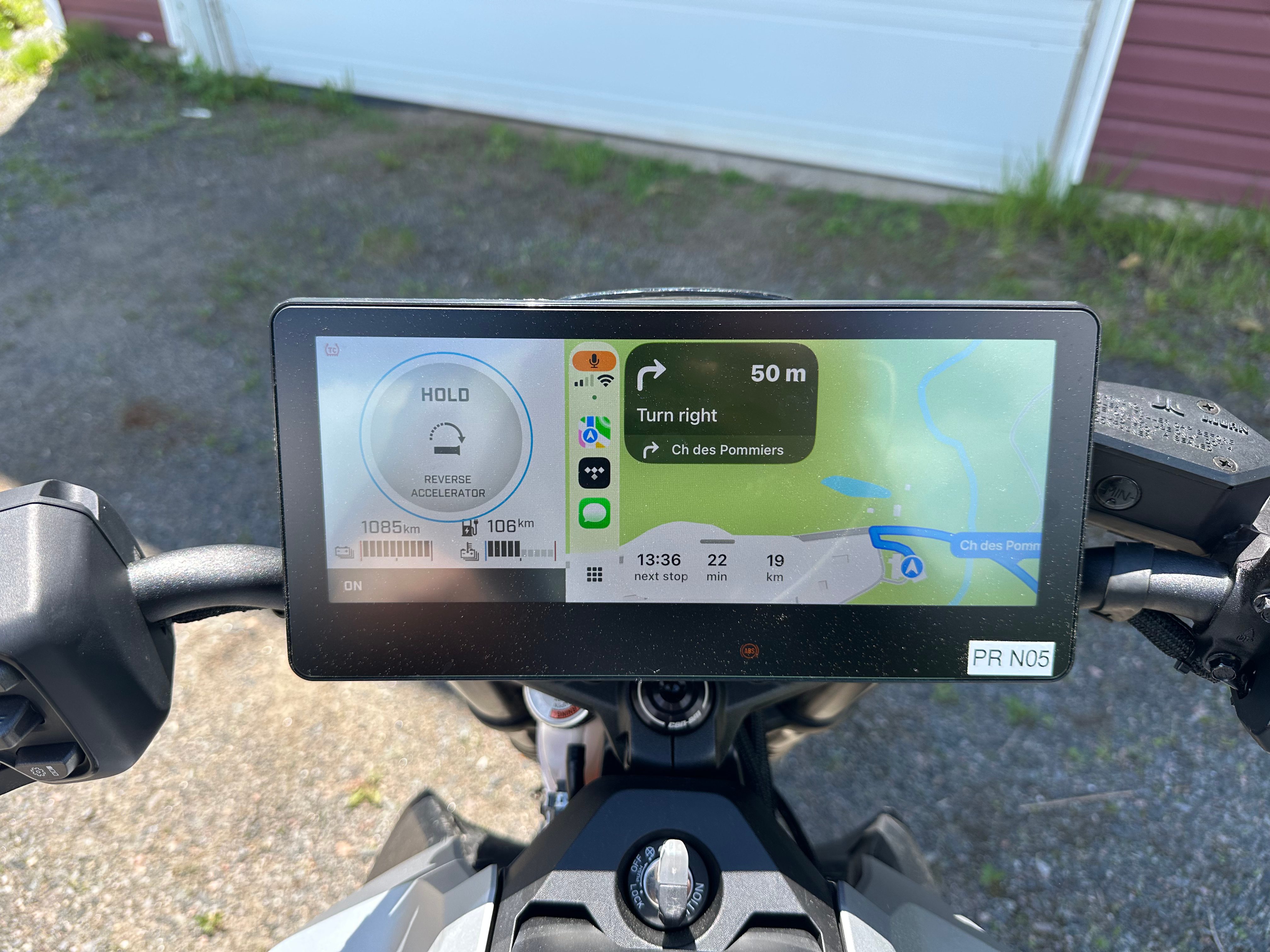
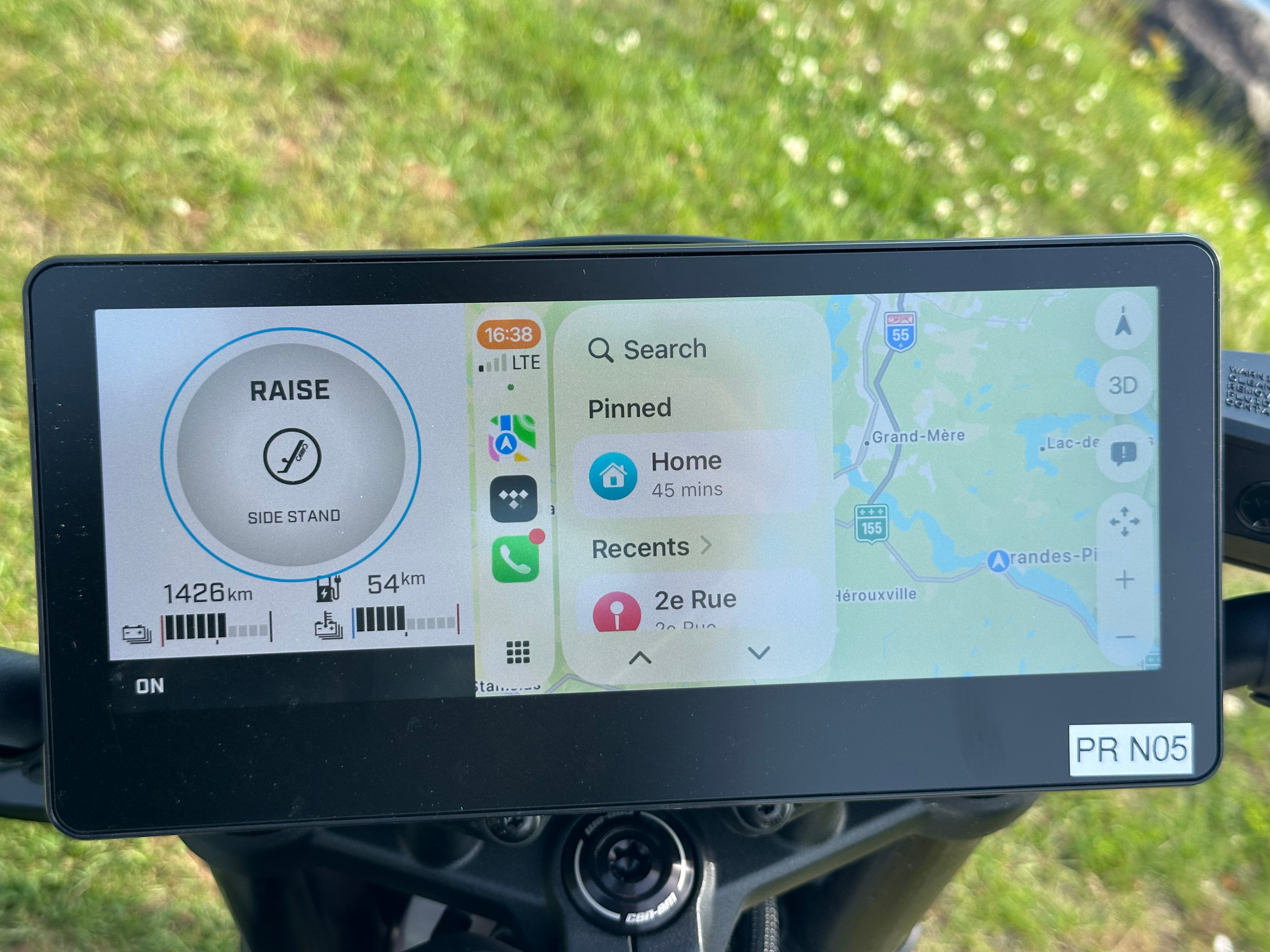
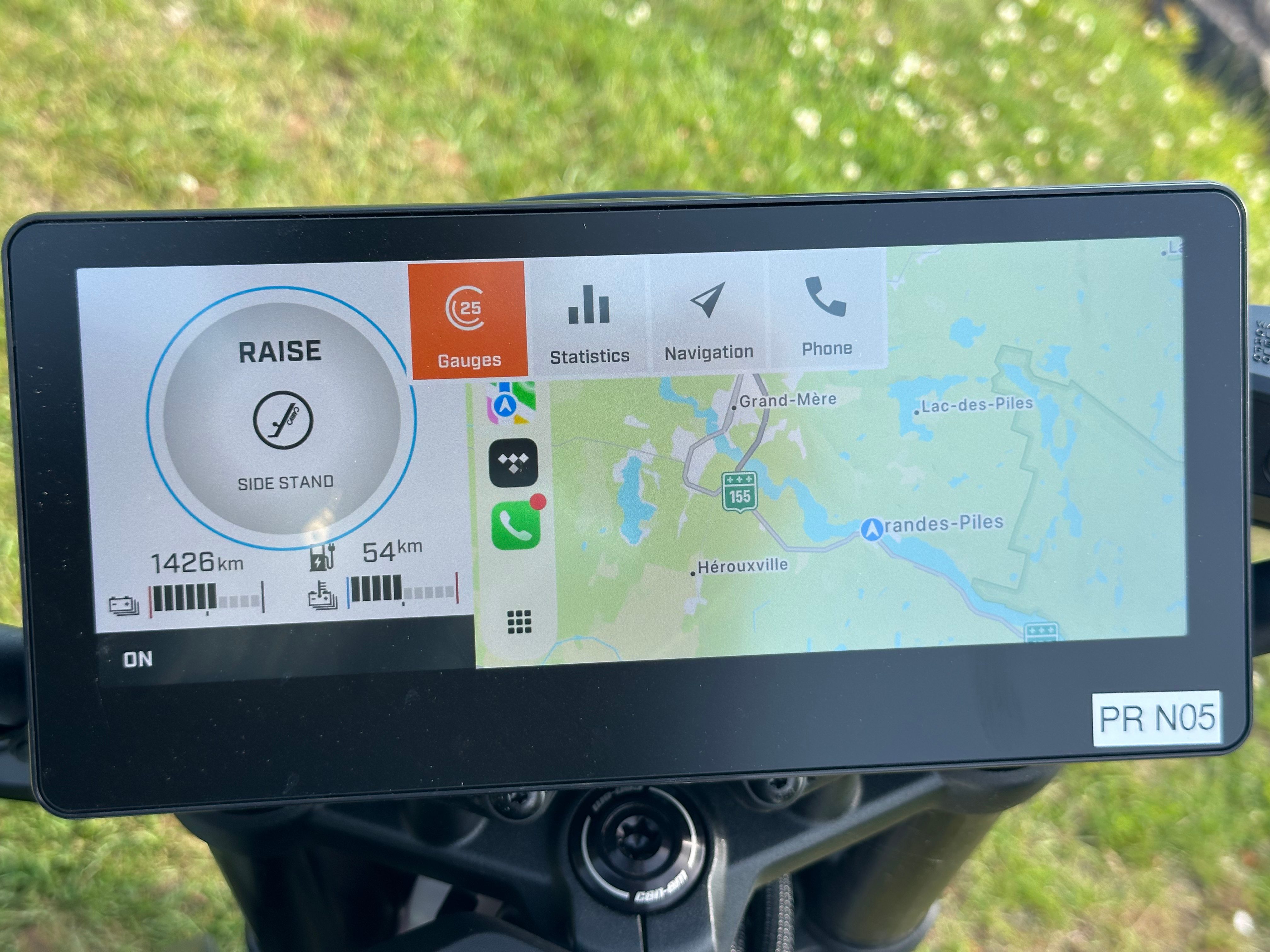
The dash is clear and easy to read, and there are multiple display layouts to choose from so you can prioritize the information you care about most. The Guess-o-meter (Can-Am’s range estimator) is accurate enough to trust for day-to-day trip planning, though I’d like to see the battery’s state of charge shown as a plain percentage as well.
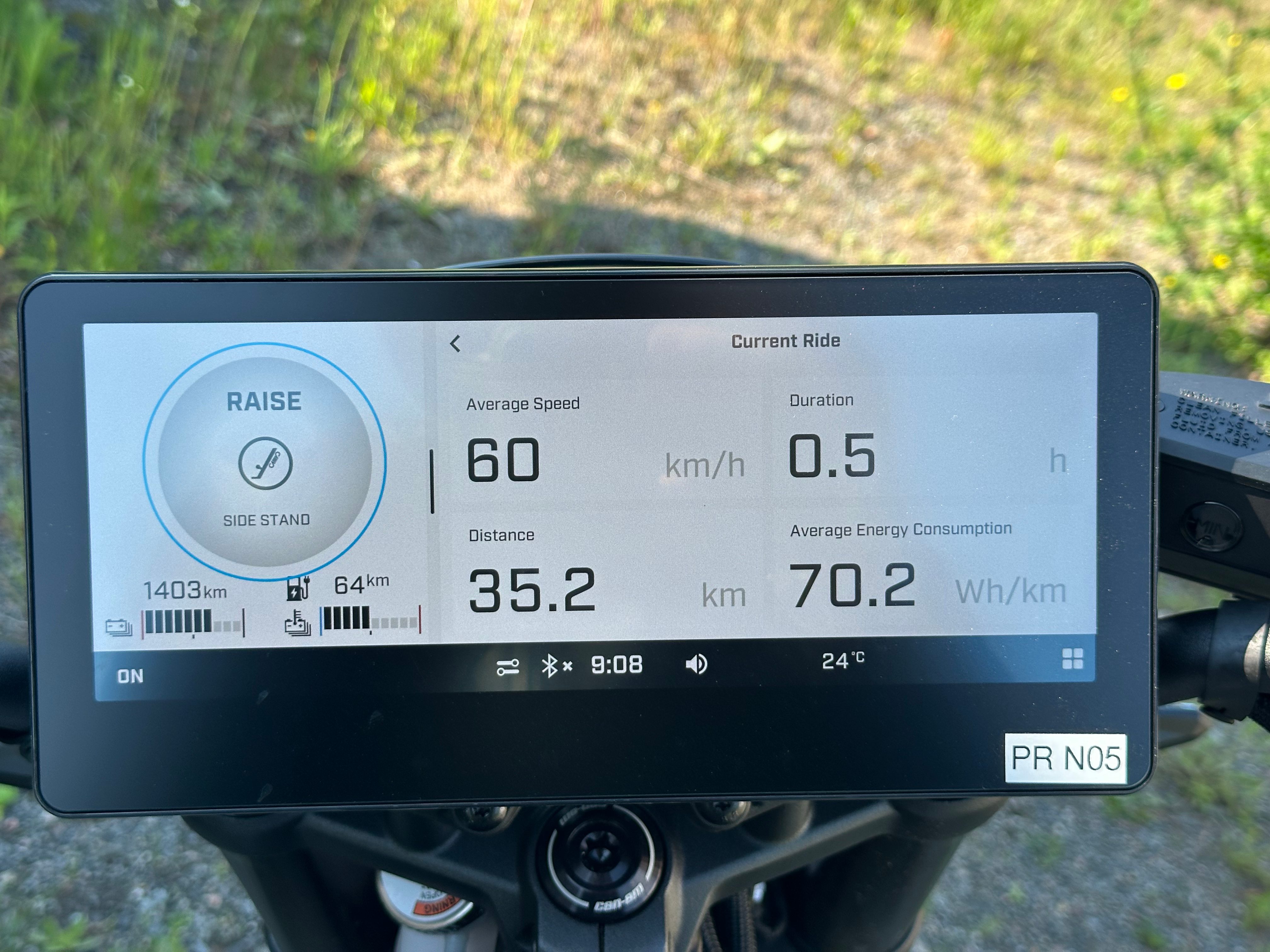
Main view with statistics 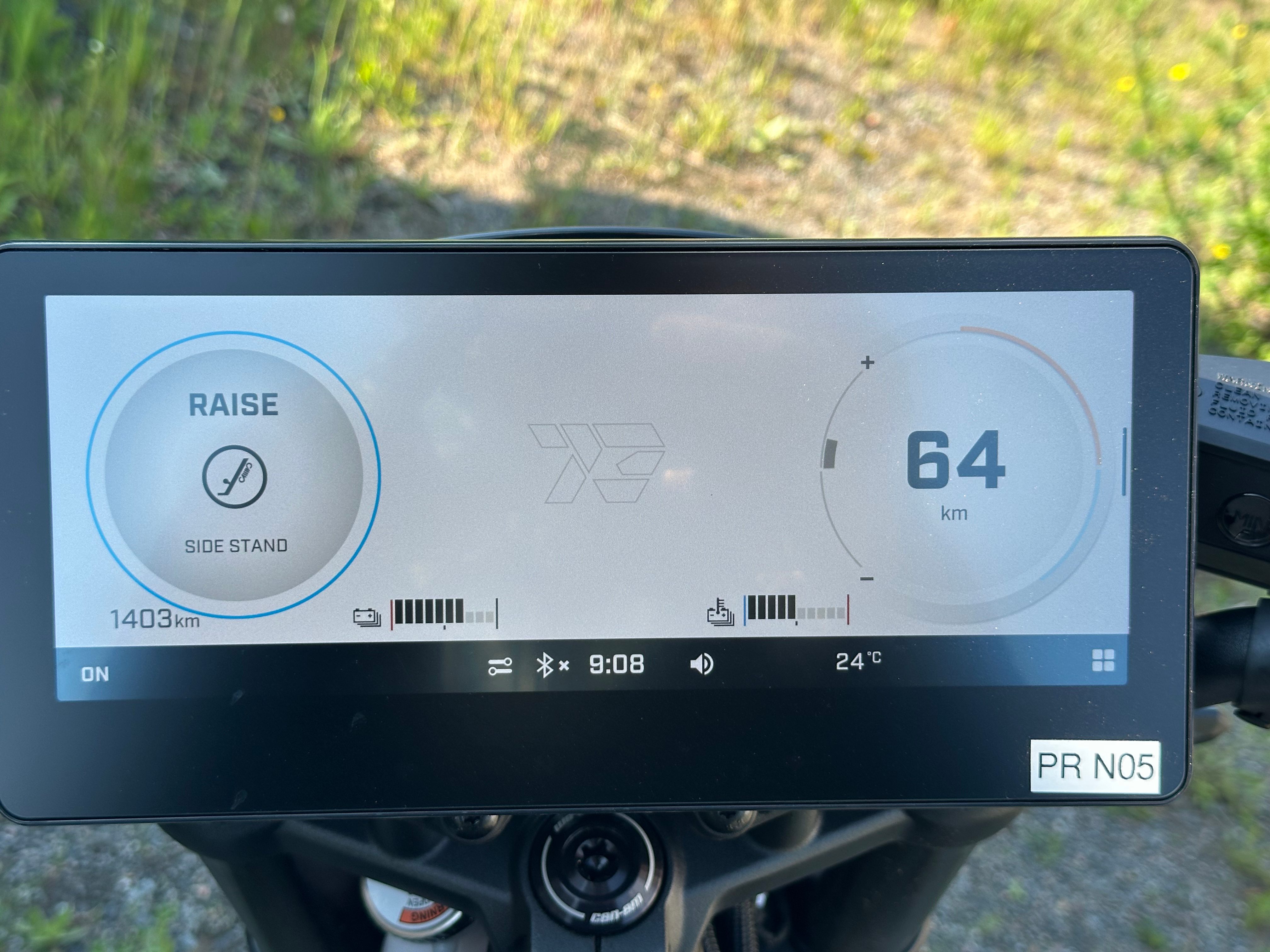
Main view with gauges 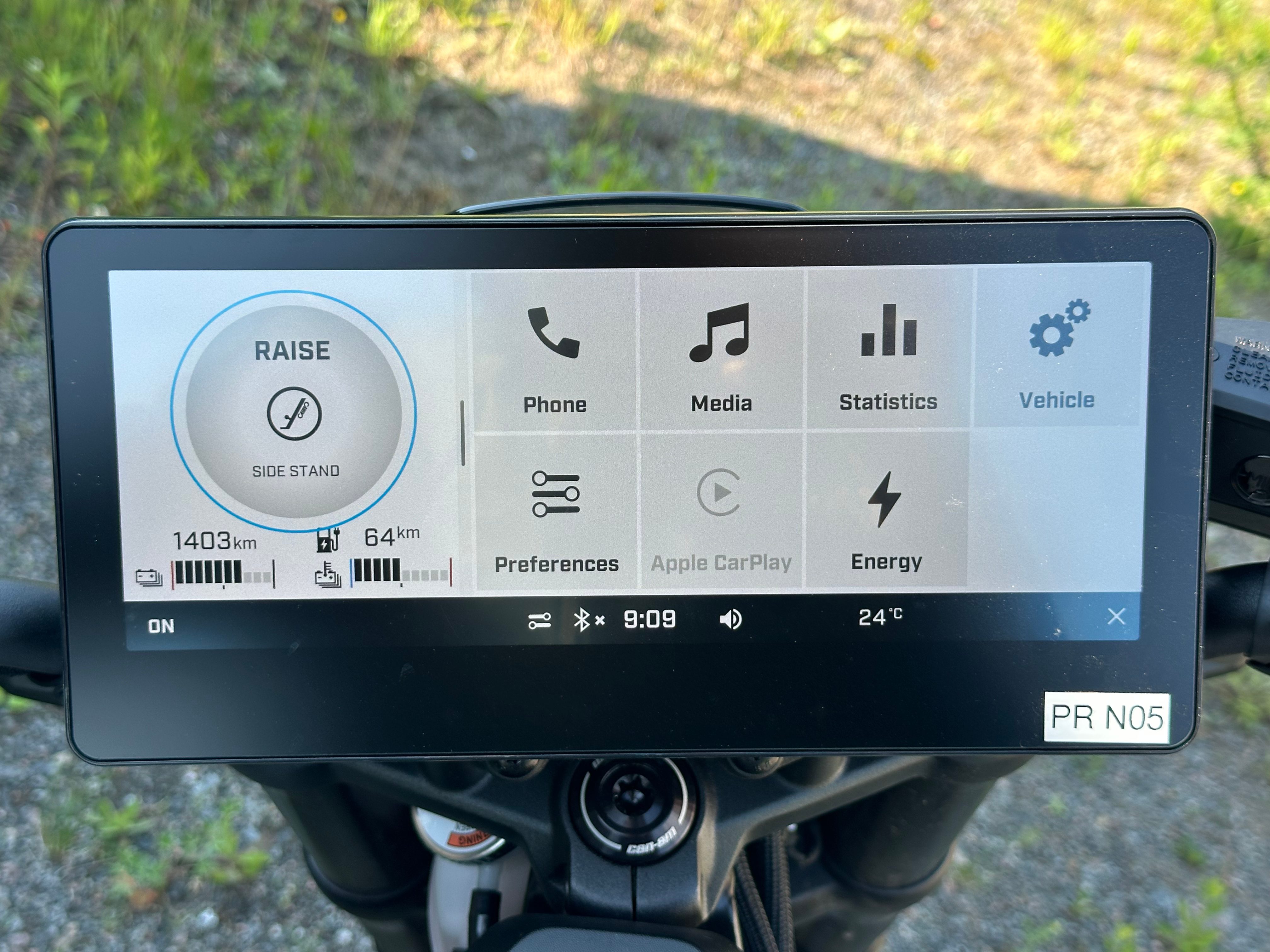
Main menu 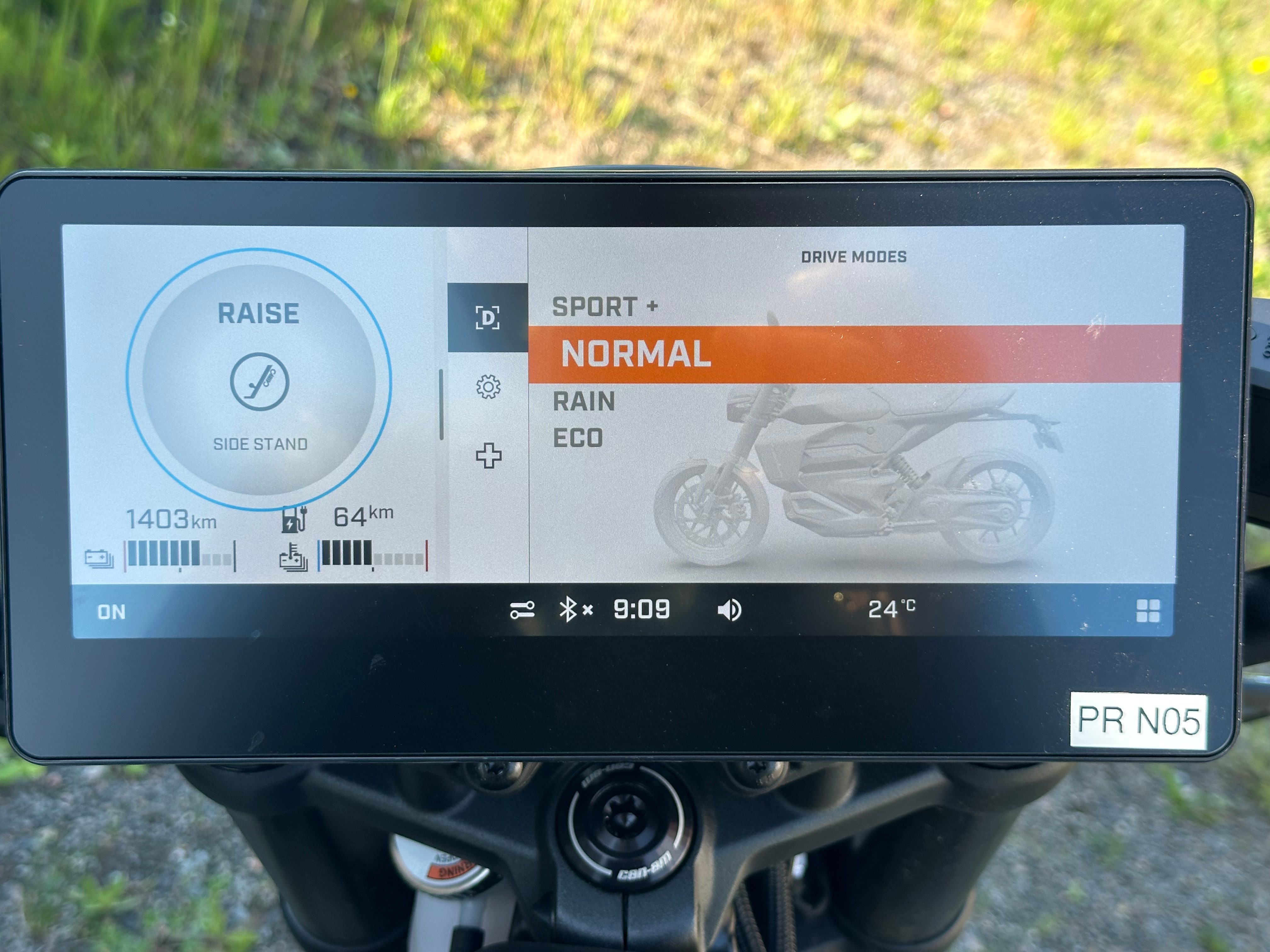
Ride modes 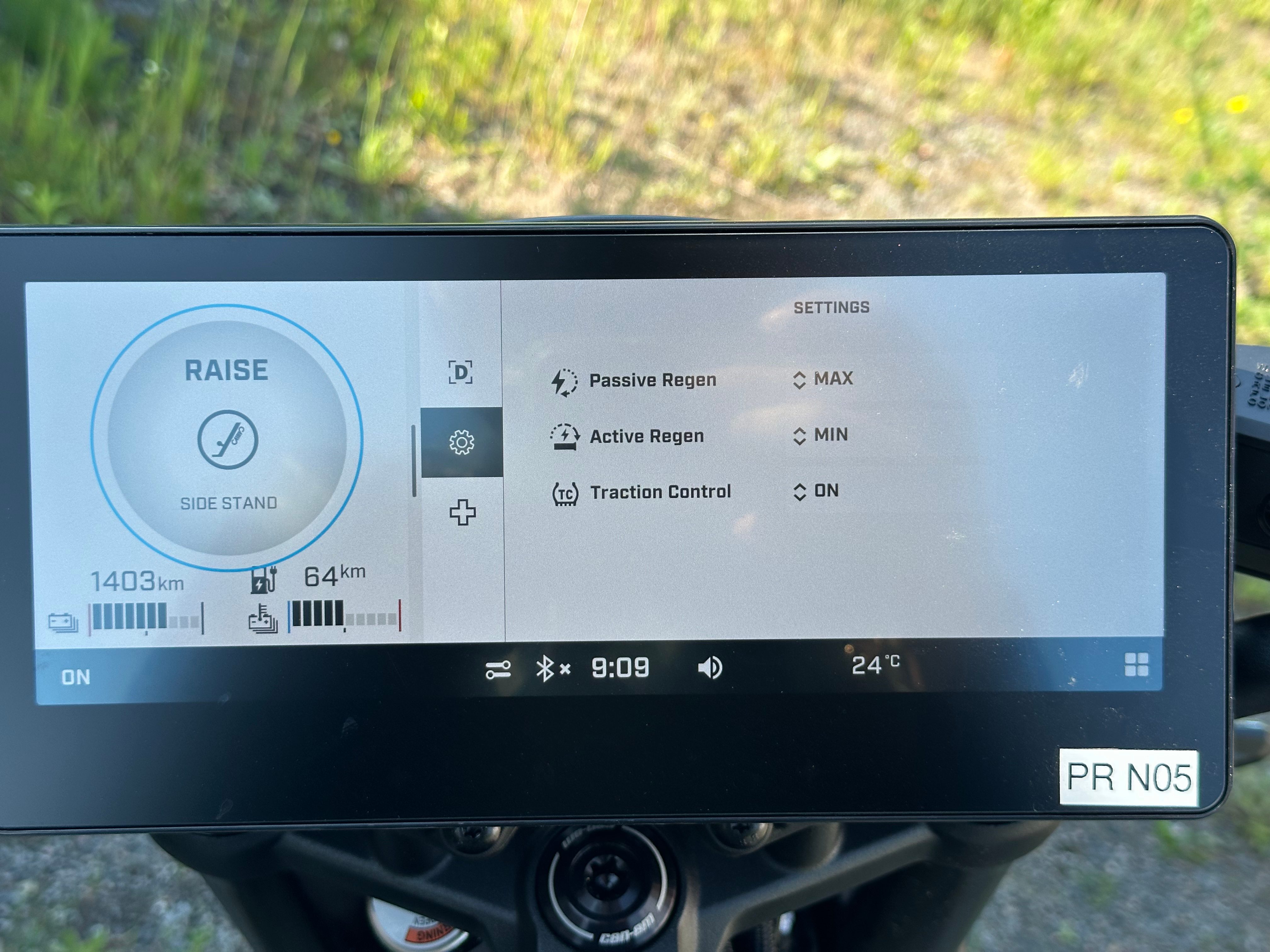
Settings for the regen 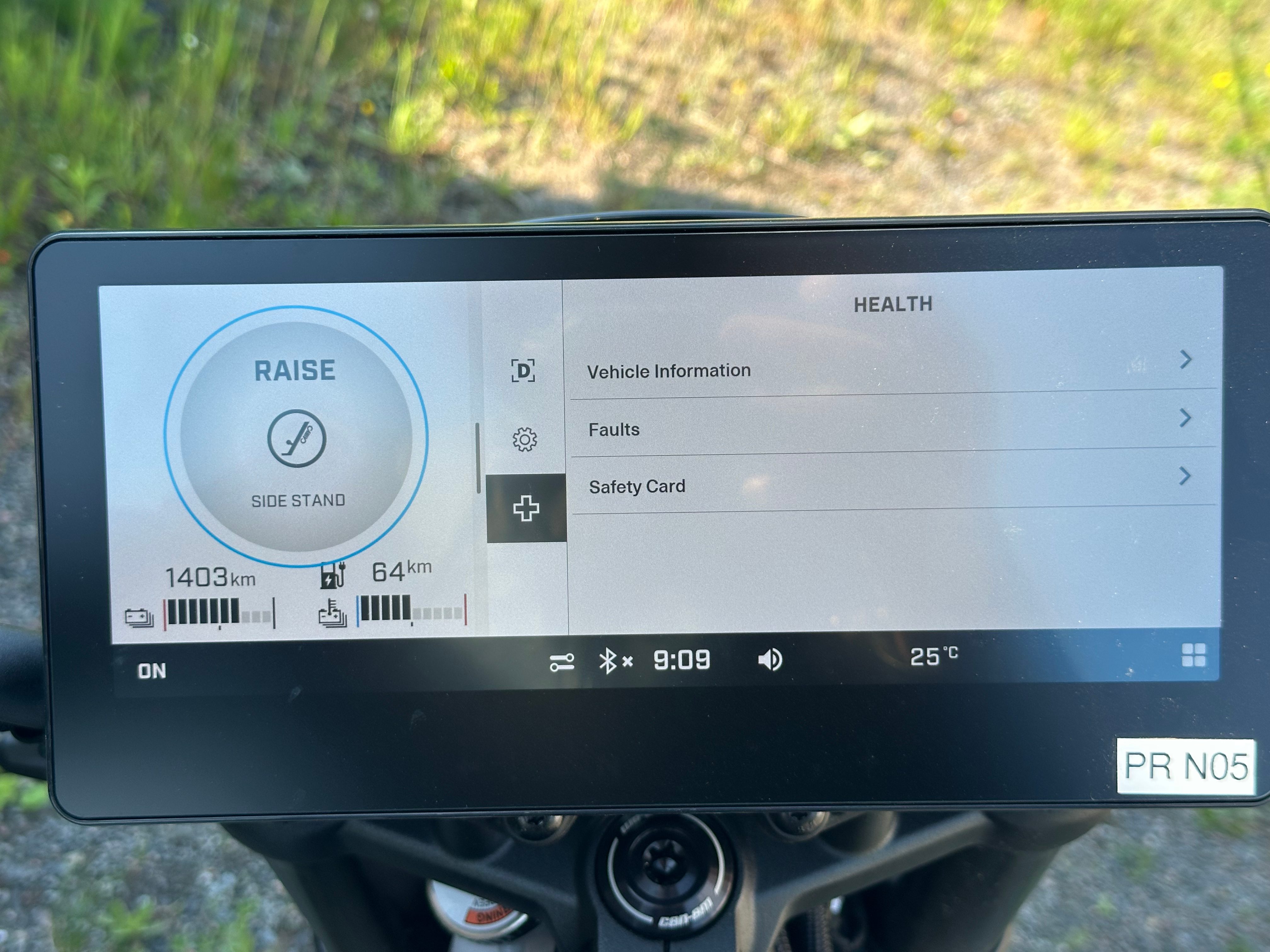
Vehicle status 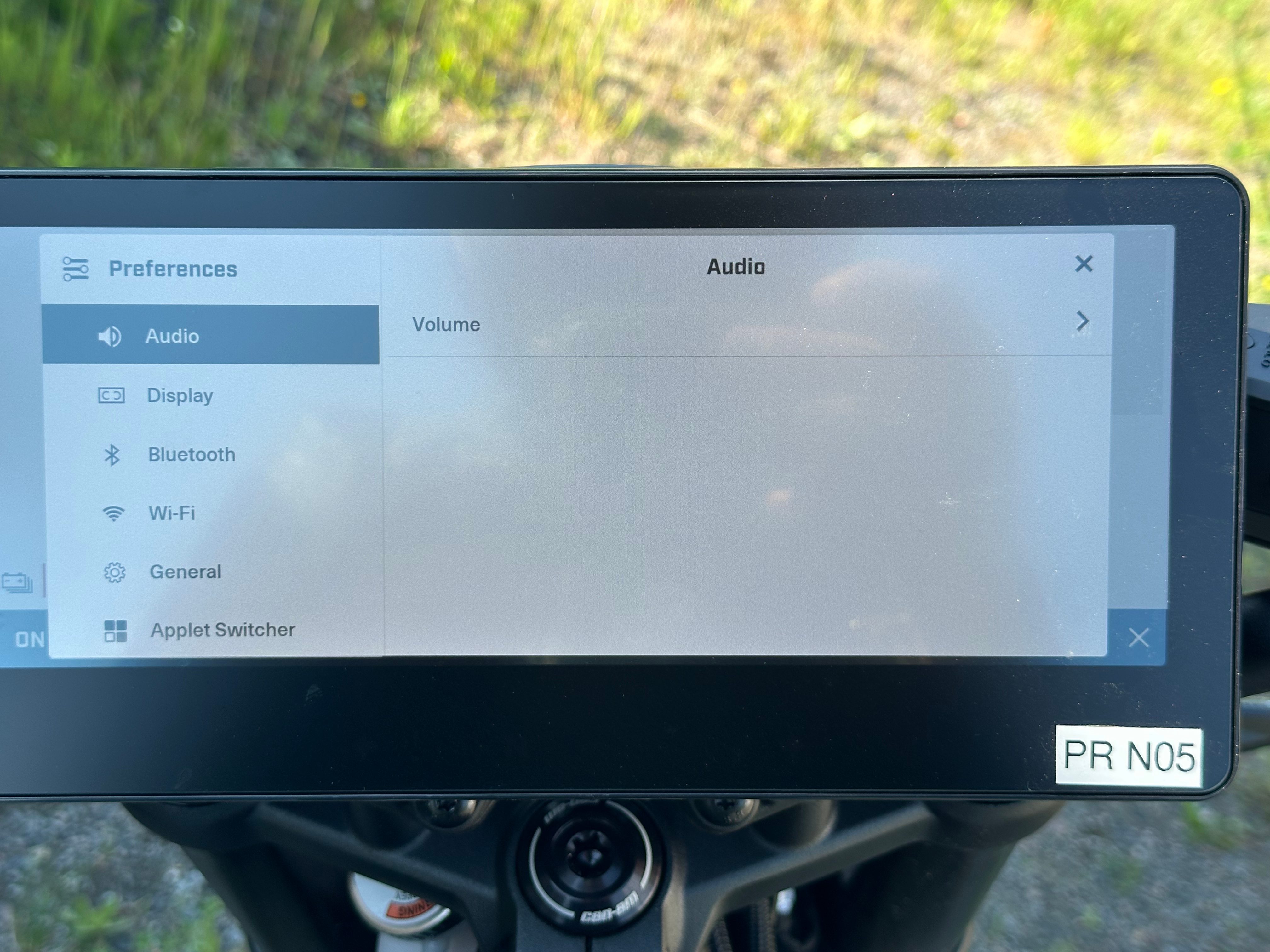
Various options 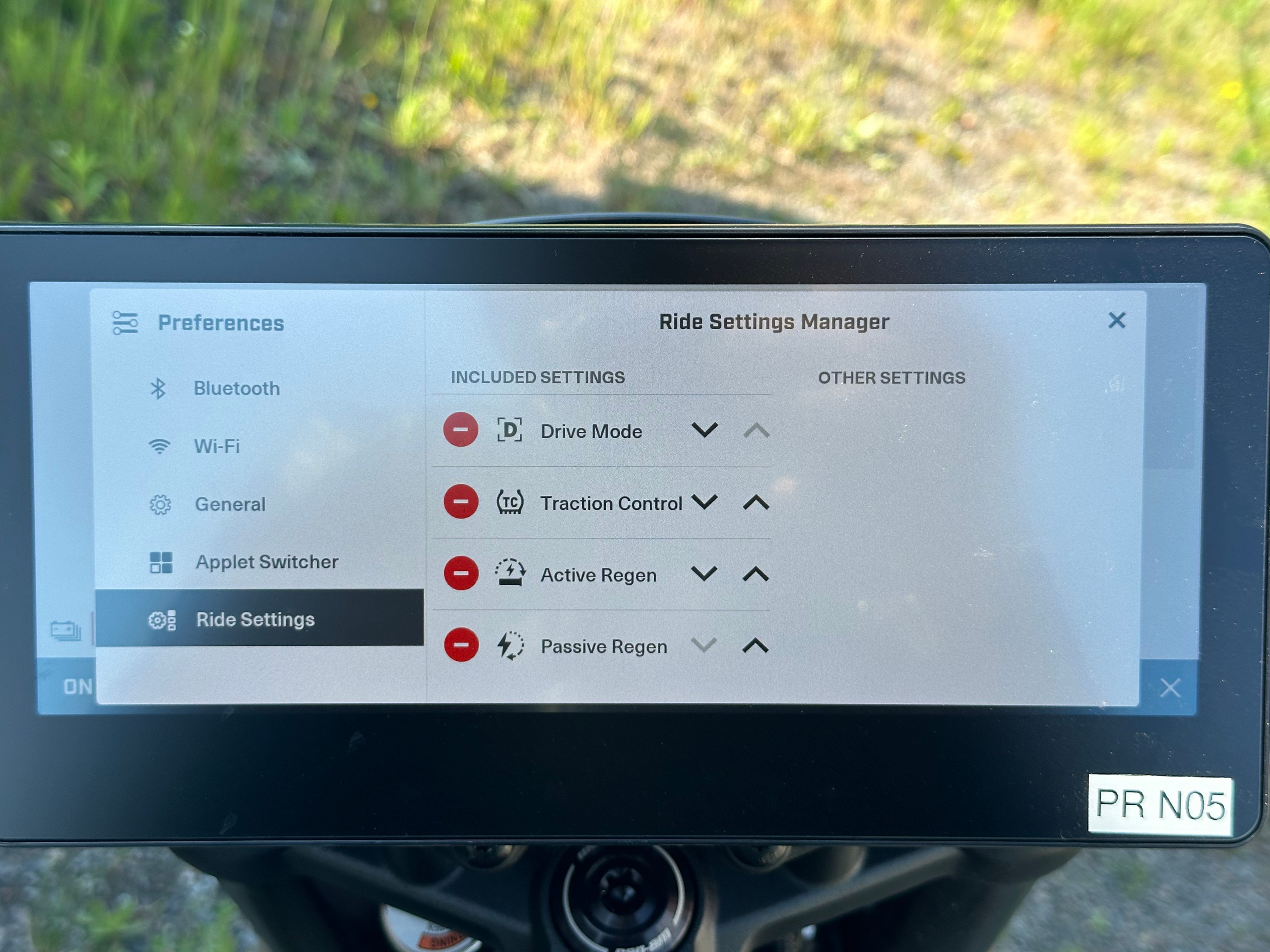
Ride settings selection to be accessed by the handlebar commands 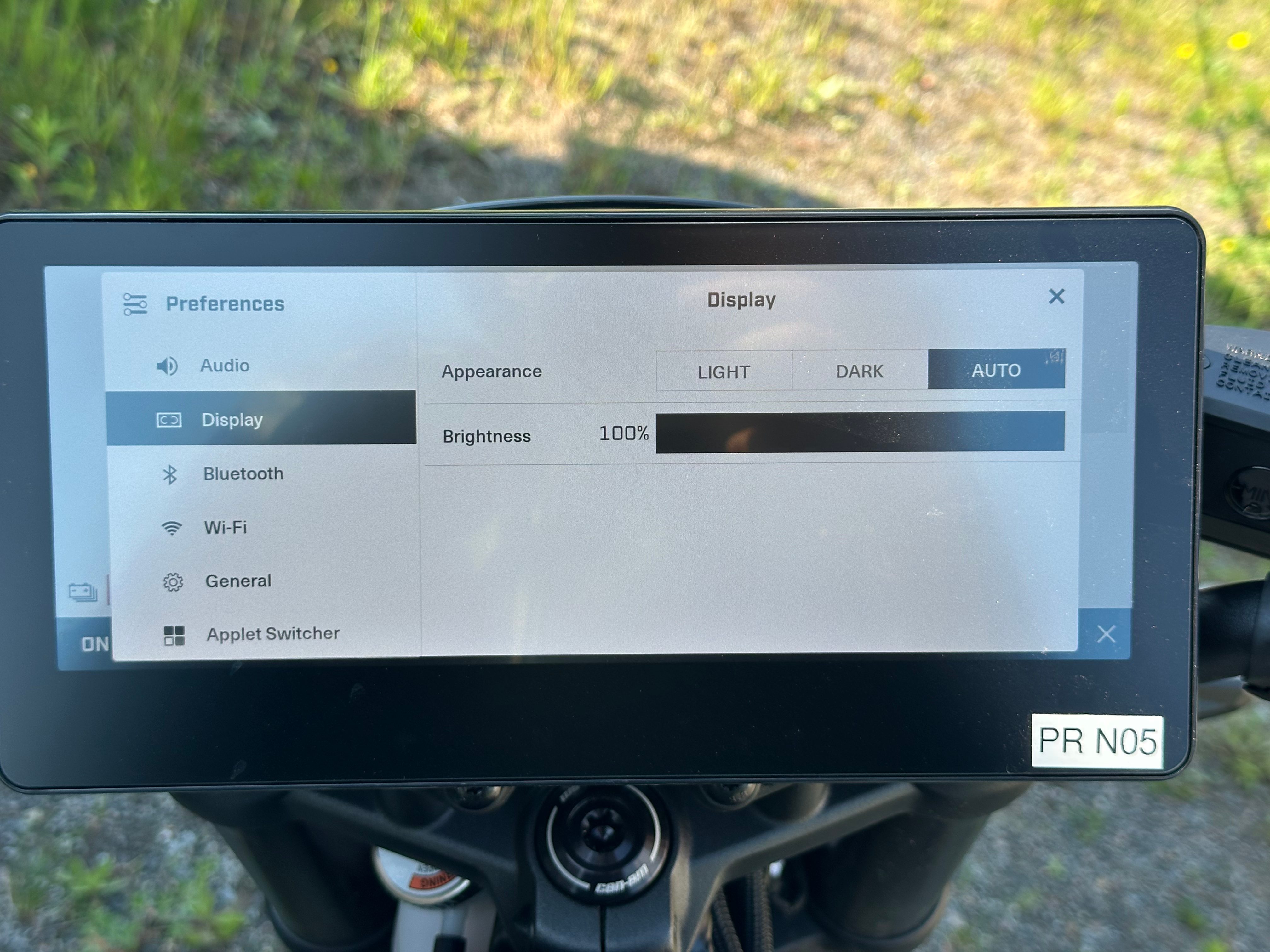
Display Brightness and day/night mode settings 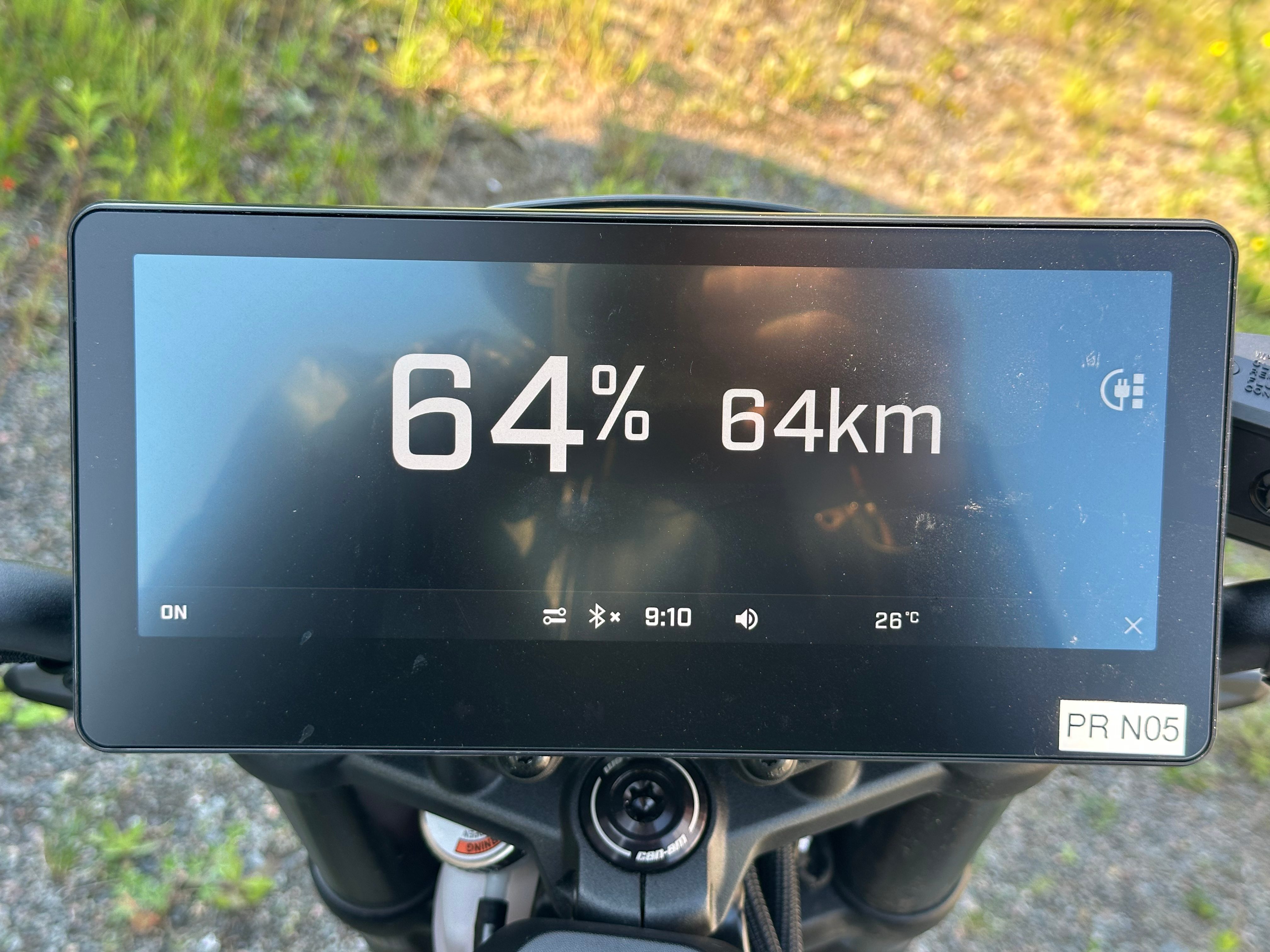
Idle/charging screen 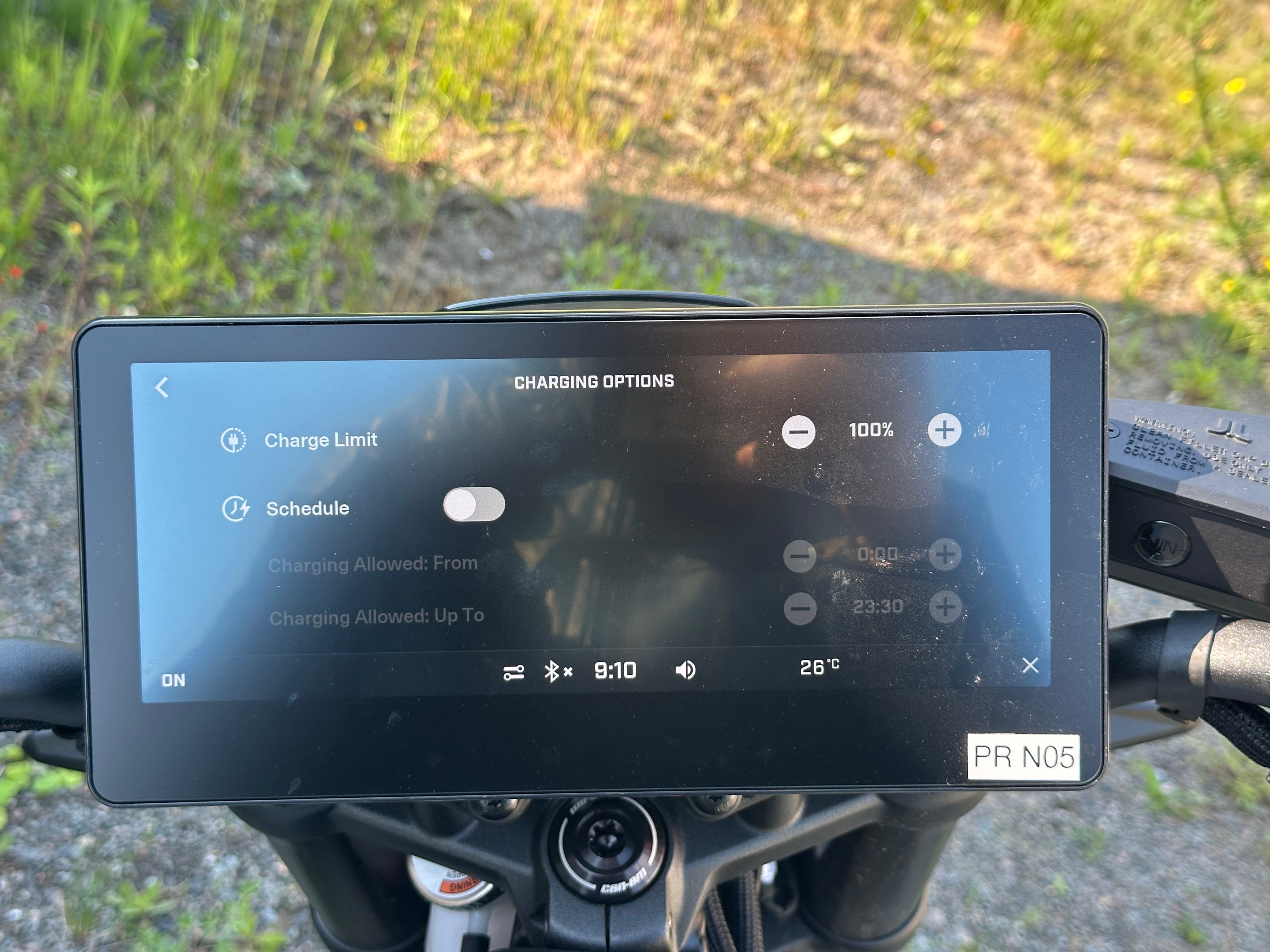
Charging Options 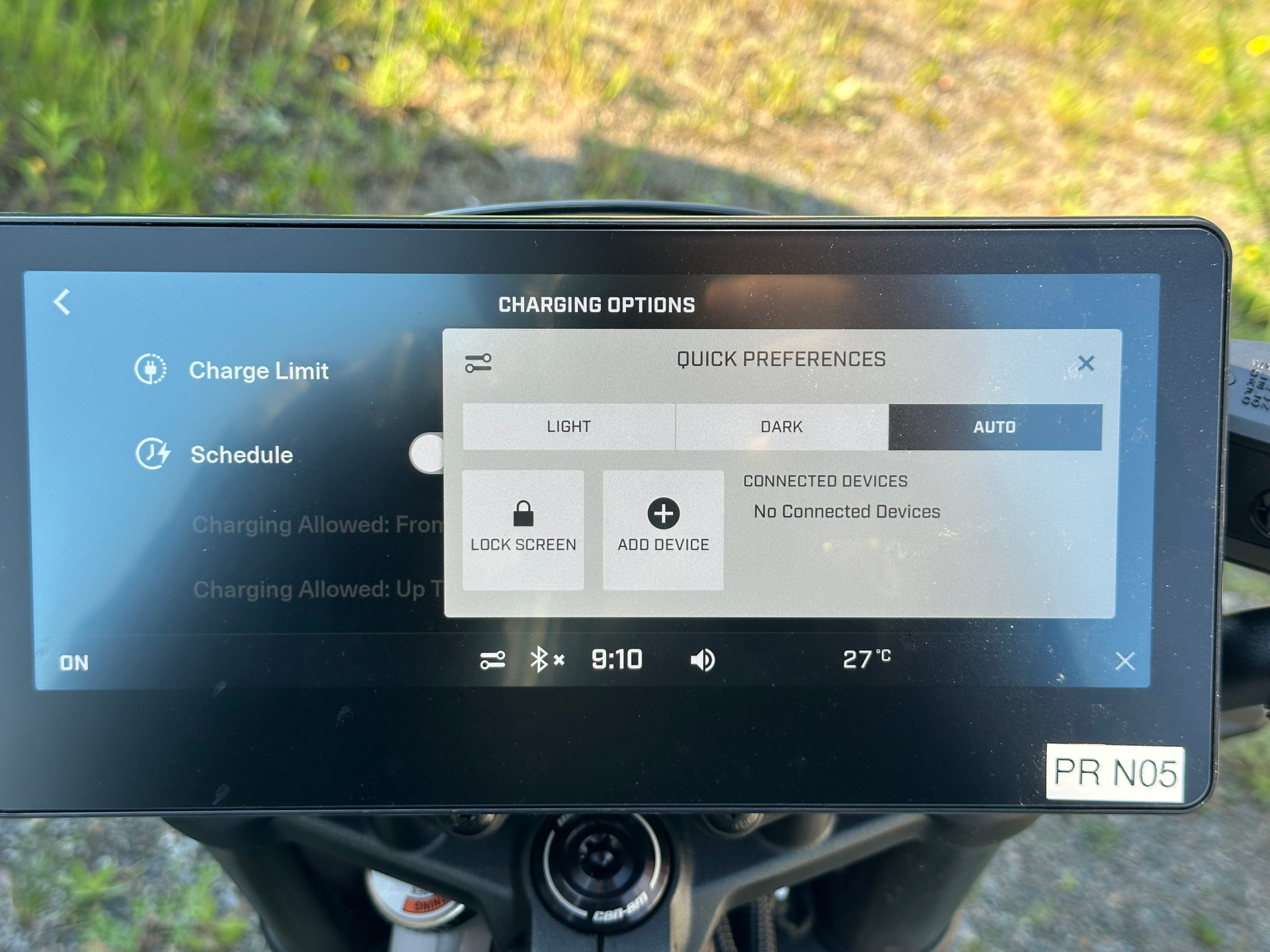
Quick parameters accessible from every menu
I did find the UI a bit slow to respond to inputs, and this becomes more noticeable once Apple CarPlay is running.
CarPlay itself is genuinely useful for navigation on a city commuter, giving turn-by-turn directions as well as an idea of how much range you have left to reach your destination. That said, it comes with a few frustrating restrictions: the phone has to be connected over USB, and CarPlay won’t even switch on unless a Bluetooth headset is also paired to the bike — even if all you want is to glance at the map without listening to music, taking a call, or hearing turn-by-turn prompts.
On top of that, navigating within CarPlay through the handlebar controls is tricky, since it really wants touch input, and reaching over to touch a screen isn’t something you can safely — or practically, with gloves on — do while riding a motorcycle.
Handling is very good, and the powertrain is extremely responsive; you feel in control at all times. It’s quiet too, with a nice motor whine building under full throttle, a sound I actually quite liked.
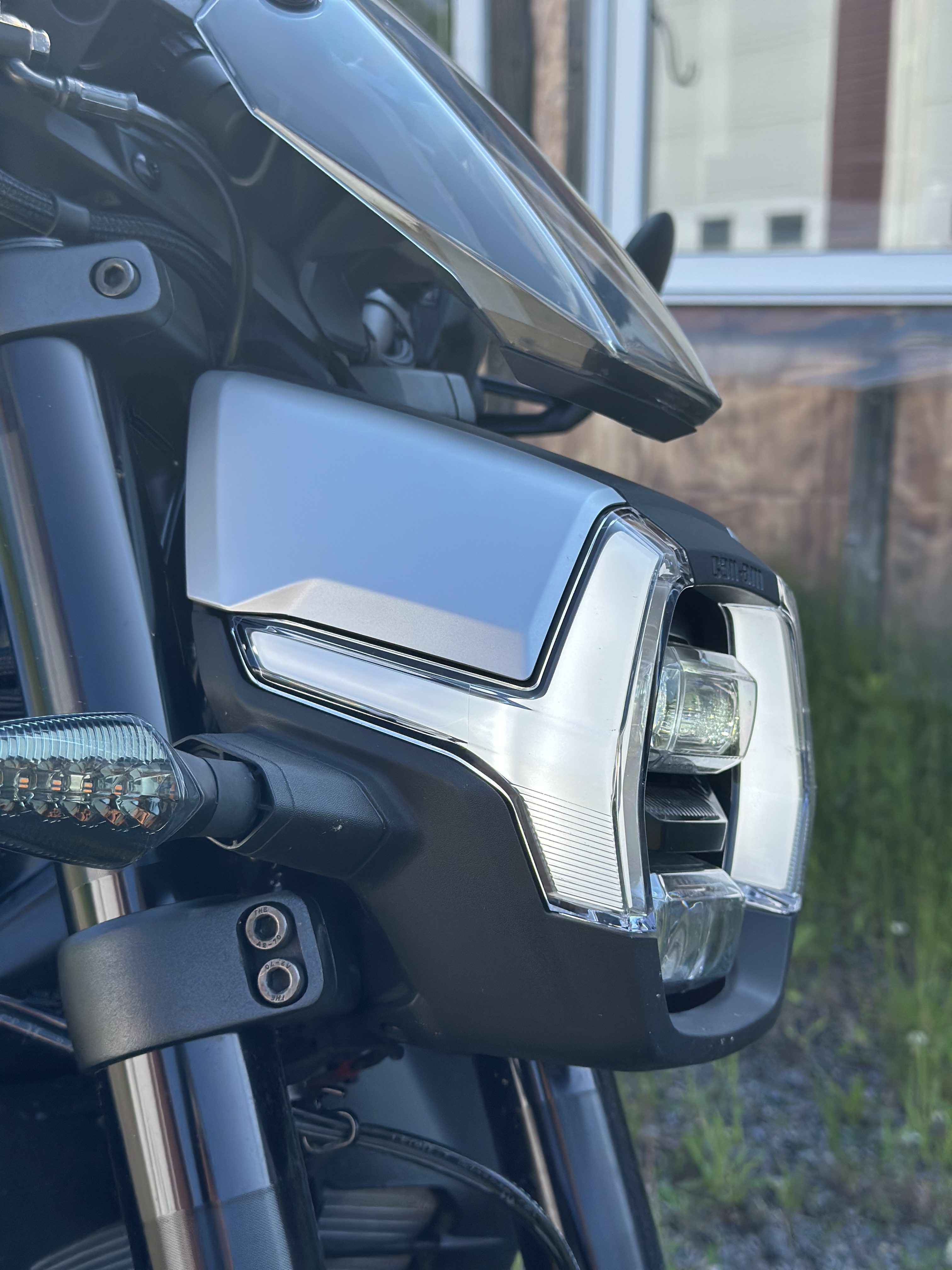
I really enjoyed riding this bike — it’s pleasing, and everything about it feels effortless. The bike is also very nimble, and I got used to it within minutes. You can dial the amount of throttle lift-off regen with 3 levels (Off, Standard, High) as well as the maximum regen achieved with the back twist of the throttle to fit your driving style. I loved that, and I hope Can-Am improves on it to give an even more precise control of the added regen, using more of the throttle back twist range.
Four ride modes — ECO, Normal, Rain, and Sport+ — are easily selectable on the fly, letting you dial in the throttle response and power delivery you want for the situation. Rain mode in particular maximizes traction control and softens acceleration to keep things manageable in wet or slippery conditions.
Traction control itself is very reactive, and I could feel it stepping in to help manage the electric motor’s torque on uneven pavement or dirt roads.
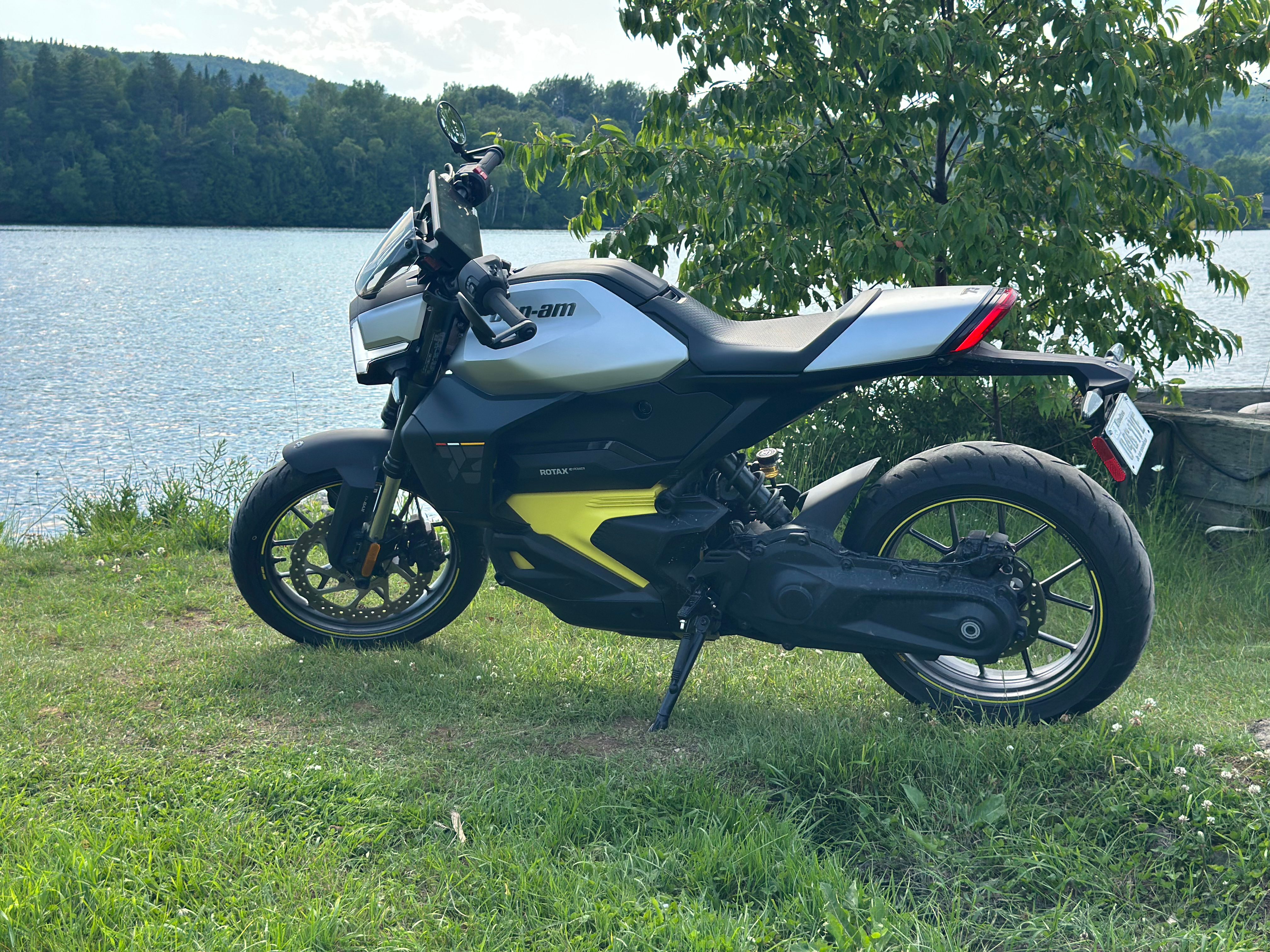
Top speed is limited to 129kph (80mph), with power tapering off as you approach that limit. That said, I never had any trouble getting up to highway speed quickly from an on-ramp.
As for any capacity of road tripping, unfortunately that’s not possible; charging times are too long for that and would require waiting approximately 1 hour every 1 hour of driving if highways are not used.
Quite a lot of accessories are available for the Pulse, using Can-Am’s proprietary LinQ system. You can add storage bags, LED lights, a second passenger seat, a top case, and a tank bag, to name a few.
At $10,999 ($14,299 CAD) for the standard Pulse, Can-Am undercuts both of its closest rivals by a small margin: the Zero S starts at $13,495 ($20,395 CAD), and the LiveWire S2 Del Mar carries an MSRP of $11,999 ($16,799 CAD).
For some reason, the price gap in Canada is wider, maybe because of those dumb ongoing tariffs…
For the 2026 model year, the price has been slashed by as much as $3,000 ($4,000CAD).
However, the Pulse is in a class of its own. It’s smaller, offering less energy capacity and power, which translate into a lighter motorcycle. It’s also the only one using an oil-containing enclosed chaincase and not a belt that will wear and break while driving, and it includes a water-cooled battery and powertrain.
That said, water-cooling a battery is definitely more expensive than the air-cooled setups we see on the competition. It allows the battery to last longer, but I don’t think that’s a problem for a motorcycle, so is it necessary for the Pulse to have this? Without DC Fast Charge, I don’t think the customer is taking advantage of paying for it.
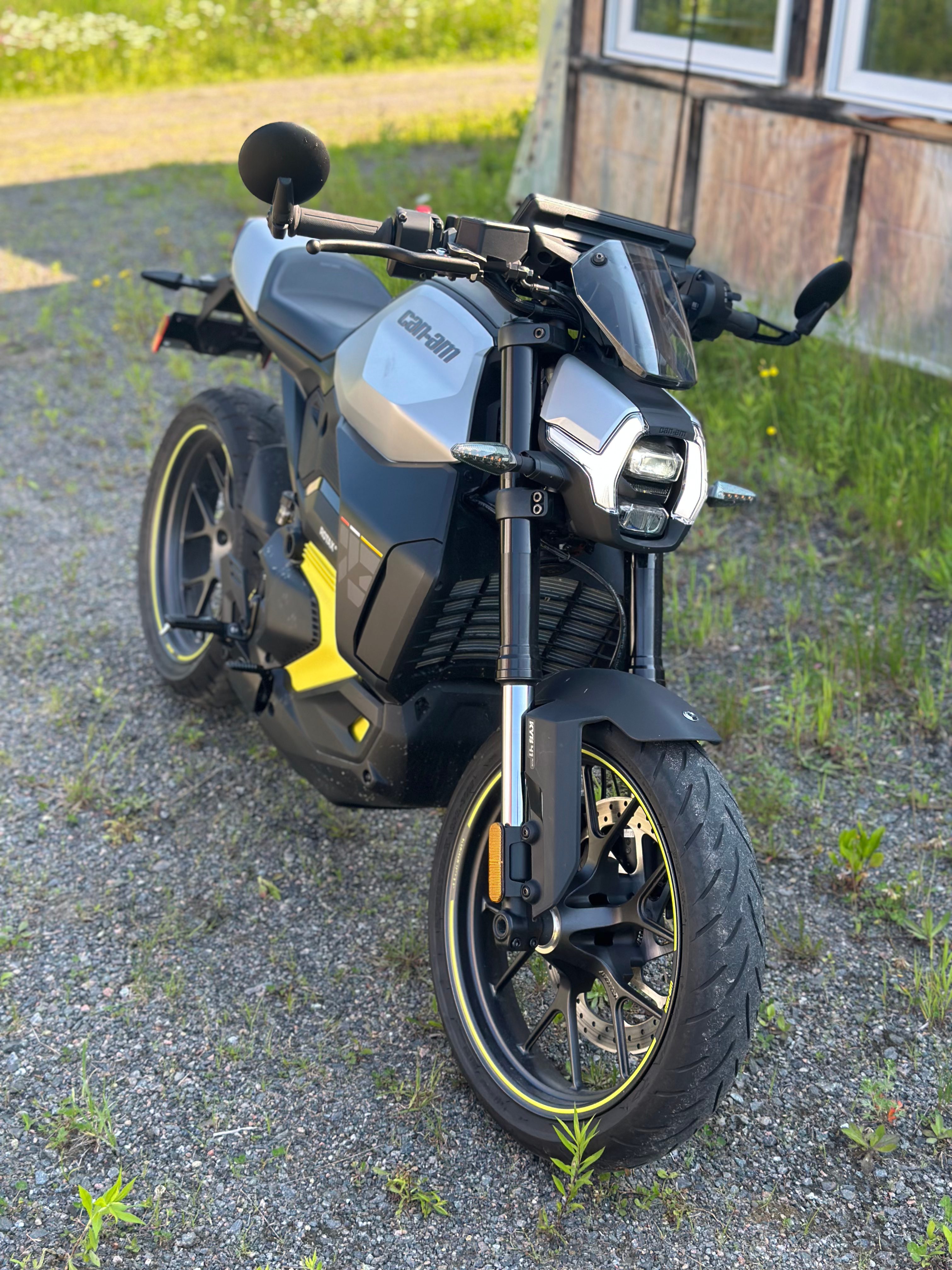
It’s an entry vehicle that fits a precise market. Question is, is this market aware the Pulse exists, and is it ready to spend money on it?
As for the vehicle quality, it’s mostly good and feels sturdy, except for the glove compartment where the lock is difficult to open and latch correctly. It’s a minor inconvenience, though.
Can-Am’s own marketing backs this up: the Pulse is pitched as a bike “crafted for the energy of city life” and designed for commuters and urban riders, not as a do-it-all machine. Everything about how it’s built, from its size to its charging speed, points to the same conclusion I came to on the road: this is a machine built for one job: the daily commute.
Used that way, it’s very good at its job. I found it genuinely useful for the daily grind through heavy traffic, thanks to how nimble and responsive it is.
Where Can-Am fell short is DC fast charging. Adding that option, the same way early EVs eventually got it, would broaden what the Pulse can realistically be used for, letting it cover the occasional longer trip instead of being locked into a pure commuter role. It would also help on the days your workplace charger is occupied or out of order.
Braking inspired confidence, with a strong initial bite from the front lever, backed by ABS and Motorcycle Traction Control (MTC) working in tandem. Can-Am says the system is tuned to enhance stability and grip even on slippery pavement, and that matched what I felt on wet roads.
Handling and balance were exactly what I’d expect from a light, city-oriented bike: stable and easy to trust, helped by the low center of gravity that comes from using the frame itself as the battery housing.
Visibility was good in both directions. The mirrors, already a highlight for their size and clarity, also do real work here, keeping you aware of what’s coming up behind you in traffic. The display is large and easy to read at a glance, and it didn’t blind me riding at night.
Pedestrian awareness wasn’t a concern despite the Pulse’s quiet motor: the horn is loud and effective, which more than makes up for the lack of engine noise.
Electreck’s take
I did enjoy my time with the Pulse. I think the foundations are sound and the most important stuff is well thought out. It’s a nice bike for city driving — small, zippy, and light. I do find its use case somewhat limited, though, and I’m not in the targeted market.
For me, I’d like Can-Am to offer a bigger naked bike, with a battery 50% bigger in terms of energy capacity and DC fast charging capable of a 0-80% session in about 20 minutes. That would fit all my possible use cases.
Specifically for the Pulse as it is, I strongly recommend Can-Am install a NACS port and enable DC fast charging. They might need to switch to tabless 2170 cells in order to achieve decent and useful charging time, and with those cells becoming more popular over the last year or so, I’m fairly confident it’s doable with only a small price increase.
You might find our scoring a bit rough, but it is the first electric motorcycle that we are scoring. Due to the nature of our scoring system, I think it would score competitively against other bikes.


FTC: We use income earning auto affiliate links. More.



Comments